

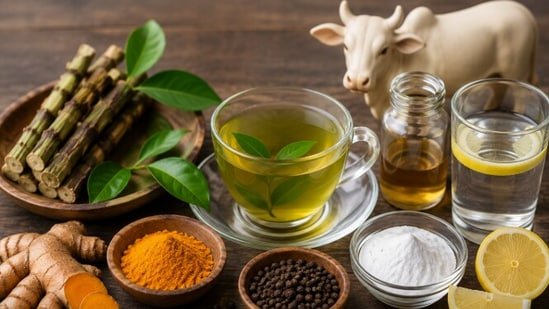
The internet is flooded with claims that everyday kitchen ingredients and traditional remedies can prevent, or even cure, cancer. But how much of it is actually backed by science? Dr Vartika Vishwani, a surgical oncologist, weighed in on some of the most viral “desi” cancer remedies in a July 2 Instagram post, rating them out of 10 based on the available evidence while stressing that none of them should replace evidence-based cancer treatment. (Also read: Best and worst cooking oils revealed: Hyderabad oncologist gives ghee 9/10, refined sunflower oil gets a ‘big zero’ )
Giloy: ‘2 out of 10’
The doctor gave Giloy a 2/10, addressing the popular claim that it stimulates T cells and macrophages, key components of the immune system.
According to the surgical oncologist, while some animal (rodent) studies have suggested immune-modulating effects, there is currently no convincing evidence in humans that Giloy has anti-cancer benefits. The doctor also pointed to reports linking Giloy consumption with liver injury, advising people to consume it in moderation rather than assuming it is harmless.
Green tea: ‘6 out of 10’
Green tea received the highest score among the remedies discussed, earning 6/10. The doctor explained that green tea contains epigallocatechin gallate (EGCG), a compound that has shown promise in laboratory research by inhibiting the growth of blood vessels that feed tumours and affecting telomerase, an enzyme involved in cancer cell survival.
However, most of these findings come from lab and preclinical studies, and drinking ordinary amounts of green tea has not been proven to prevent or treat cancer in humans. The doctor added that consuming more than five cups a day may be required to achieve antioxidant levels studied in research, which is one reason the remedy did not receive a higher rating.
Cow urine and lemon with baking soda: ‘Minus 10’ and ‘0 out of 10’
The surgical oncologist was particularly critical of cow urine, giving it a minus 10 out of 10. The doctor said that patients sometimes delay proven cancer treatments while relying on such remedies, which can reduce the chances of successful treatment. The claim that cow urine can cure cancer is not supported by scientific evidence.
Similarly, lemon with baking soda received 0/10. Addressing the popular belief that it makes the body’s environment alkaline and therefore unsuitable for cancer cells, the doctor dismissed the claim, explaining that the human body tightly regulates blood pH within a narrow range. Significant changes in blood pH are a medical emergency and do not occur simply by consuming alkaline foods or drinks.
Turmeric with black pepper: ‘4 out of 10’
The doctor rated turmeric with black pepper 4/10. Curcumin, the active compound in turmeric, has shown anti-cancer potential in laboratory studies, and black pepper contains piperine, which may improve curcumin absorption. However, the surgical oncologist noted that human studies have not established turmeric as an effective cancer treatment or prevention strategy, which is why the remedy received a relatively modest score.
The doctor concluded by reminding viewers that while certain foods and plant compounds continue to be studied for their potential health benefits, none of these remedies should be considered a cure for cancer or used as a substitute for timely medical evaluation and evidence-based treatment.
Note to readers: This article is for informational purposes only and not a substitute for professional medical advice. Always seek the advice of your doctor with any questions about a medical condition.
This report is based on user-generated content from social media. HT.com has not independently verified the claims and does not endorse them.
