

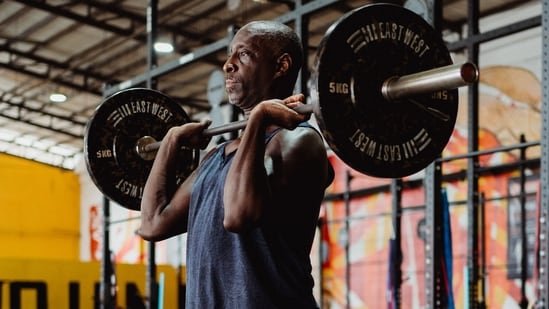
As more people take up gym workouts and strength training, conversations around exercise-related injuries have also become more common. While weightlifting offers numerous health benefits, lifting excessively heavy weights without proper technique or adequate preparation can place significant strain on the abdominal wall. In some individuals – particularly those with a pre-existing weakness in the abdominal muscles – this increased intra-abdominal pressure may contribute to the development or worsening of a hernia.
Also Read | Considering Ozempic or Mounjaro for weight loss? Experts share who actually qualifies for GLP-1 treatment
HT Lifestyle reached out to Dr Pankaj Sharma – director of the department of robotics, bariatric, laparoscopic and general surgery at Fortis Hospital, Shalimar Bagh and founder of Shalya Clinic in Rohini, New Delhi – who explains, “Fitness and strength training have become an important part of many people’s lifestyles, but it is equally important to understand the limits of your body. Heavy weightlifting does not directly cause every hernia, but improper lifting techniques, excessive strain and ignoring early symptoms can increase the risk.”
What is hernia?
According to Dr Sharma, a hernia occurs when an internal organ or tissue pushes through a weak area in the surrounding muscle or connective tissue. It often appears as a bulge or swelling, commonly in the abdomen or groin area. The bulge may become more noticeable while coughing, lifting weights or straining and may reduce when lying down.
Can weightlifting cause hernia?
Heavy lifting alone is not always the only reason behind a hernia. However, it can act as a trigger when there is already a weakness in the abdominal wall. Factors such as genetics, previous surgeries, obesity, ageing, chronic cough, constipation and poor muscle strength can also increase the risk.
The surgeon explains, “When a person lifts a heavy weight, pressure inside the abdomen increases. If there is a weak point in the muscle layer, this pressure can push tissues through that area and reveal a hernia.”
Common warning signs gym-goers shouldn’t ignore
- A visible or noticeable bulge: Many people first notice a lump in the abdomen or groin area that appears during exercise, coughing or standing.
- Pain or discomfort while lifting: A pulling sensation, heaviness or pain during workouts may indicate that something needs medical evaluation.
- Feeling of pressure in the affected area: Some people experience discomfort rather than sharp pain, which can still be an early sign.
- Sudden increase in size or severe pain: A rapidly growing bulge, intense pain, vomiting or difficulty passing stool can indicate complications and require urgent medical attention.
Common mistakes that increase risk
Dr Sharma warns, “A common mistake I see is that people continue intense workouts hoping the discomfort will disappear. A hernia does not heal on its own and delaying evaluation can make treatment more complicated.”
He outlines the following mistakes that can complicate matters:
- Lifting beyond your capacity: Trying to lift heavier weights than your body can handle puts excessive strain on muscles and increases abdominal pressure.
- Incorrect technique: Holding your breath while lifting or using improper posture can increase internal pressure.
- Skipping core strengthening: A strong core provides better support to the abdominal wall. Ignoring core training may affect overall stability.
- Ignoring existing symptoms: Many people continue workouts despite pain or a small bulge, which may worsen the condition
Can people with hernia exercise?
The type and intensity of exercise you can safely perform depends on the type and severity of your hernia. While light physical activity may be appropriate in many cases, heavy lifting and high-intensity workouts should be avoided until you’ve been evaluated and cleared by a doctor.
Dr Sharma highlights, “Today, laparoscopic hernia repair has made treatment less invasive, with smaller incisions, reduced discomfort and faster recovery compared to traditional approaches in suitable patients. However, returning to intense workouts should always be gradual and based on medical advice.”
How to reduce hernia risk while working out?
- Warm up properly before lifting weights.
- Focus on correct lifting techniques.
- Increase weight gradually instead of sudden heavy loads.
- Maintain a healthy body weight.
- Do not ignore persistent pain or unusual bulges.
The surgeon concludes, “Strength training is beneficial when done correctly, but fitness should not come at the cost of ignoring your body’s warning signs. Any unusual swelling, pain or discomfort during workouts deserves attention because early diagnosis can prevent complications and help people return safely to an active lifestyle.”
Note to readers: This article is for informational purposes only and not a substitute for professional medical advice. Always seek the advice of your doctor with any questions about a medical condition.
