

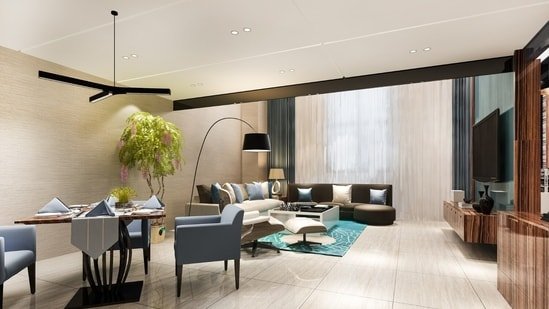
Open floor plans are steadily rising in popularity. It is a type of home layout where, instead of solid walls separating the common areas, the spaces are all connected. This means there is one free-flowing space, with more openness and fewer walls.
But such layouts are also at risk of looking messy or visually confusing, especially when the living, dining and work areas all seem to blend into one another, as this type of plan lacks clear boundaries.
The problem’s solution lies in smart zoning. With the right use of flooring, partitions, colours, ceilings and some subtle changes, you will be able to fix the messy vibe you get from an open floor layout.
ALSO READ: Decorating a boring room corner? 6 ways to make it look Instagram-worthy without overdoing the decor
But what exactly is zoning? Luxury interior designer Harshita Agarwal, founder of Harshita Agarwal Interiors, told HT Lifestyle that smart zoning helps in defining a space, which is crucial.
Focusing on the principle of balance, she describes smart zoning, “Zoning isn’t just about keeping things apart; it’s also about making sure that everything flows together in a way that fits with the way people live and work, while still keeping the space open and elegant.”
She narrowed down the one advantage that makes homeowners gravitate towards this layout: openness. But a few practical problems may eclipse this advantage.
Discussing this, she said, “The idea of making homes feel larger, more airy, and well-connected becomes crucial since open concept homes are currently the norm. However, the distinction between private and public areas may occasionally become hazy when emphasising a home’s openness.”
For those who are struggling with how to make their open floor home more organised yet retain that characteristic openness, here are some of the practical tips from Harshita on how you can apply:
1. Variation in floor patterning
- The ceiling, which tends to be ignored most of the time, has a lot of potential for smart zoning.
- It can actually help with creating zoning in space by means of material, finish, or drop differences, such as wood or POP.
In the end, the designer remarked that zoning, aside from fixing functionality-related problems, also improves the emotional experience of a home. How? She added, “When zones are clearly yet subtly defined, users can intuitively navigate through spaces without confusion or visual clutter.” To improve usage clarity, she believed textures, lighting, and materials help.
