

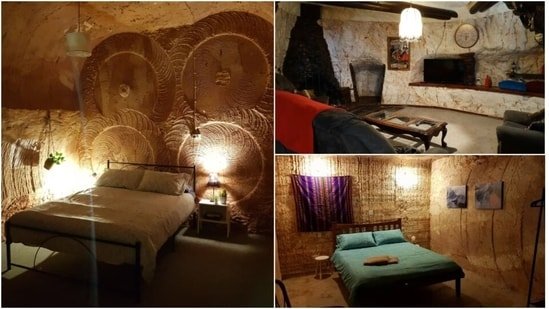
At first glance, Coober Pedy looks like a sun-bleached, abandoned outpost in the middle of the unforgiving south Australian outback. But first impressions are entirely deceptive. Beneath its rugged, dusty surface lies a sprawling, hidden network of homes, businesses, and cultural landmarks carved from solid rock. Also read | Step inside unique house in Karjat designed like 100-foot suspension bridge; internet calls it ‘art masterpiece’
A June 18 Instagram post by EarthPix shed light on this fascinating troglodyte community, capturing the world’s imagination. To escape surface temperatures that reportedly soar past 45°C (113°F),the residents of Coober Pedy didn’t just build air-conditioned houses — they moved entirely underground.
The reality of living in a ‘dugout’
The underground homes here are known to locals as ‘dugouts’. Historically carved out by opal miners, these spaces utilise passive cooling — an energy-free architectural design technique that naturally protects residents from the brutal climate above.
The local weather is famously punishing. In the peak of summer, a 2023 BBC report highlighted, surface temperatures can reach a scorching 52°C (126°F). It gets so hot that electronics must be stored in refrigerators, and birds have been seen dropping out of the sky from heat exhaustion. Even the town’s name reflects this harsh reality, loosely translating from an Indigenous Australian term meaning ‘white man in a hole’, BBC reported.
Yet, a step inside a dugout reveals a completely different world. No matter how brutal the summer heat or how bitter the winter winds, the interior temperature remains naturally stable and comfortable. Deep within the region’s iron-rich sandstone, the climate is heavily moderated — similar to the ancient underground cities of Cappadocia.
Eccentric, dark, and beautiful
For the reported 60 percent of the population living below ground, evidence of their presence on the surface is subtle: just ventilation shafts jutting out of the earth and mounds of excess soil piled near structural entryways.
Visually, the interiors are breathtakingly raw and textured, looking straight out of a classic National Geographic feature. However, the unique lifestyle takes some getting used to. One traveller recalled their stay on a road trip, commenting on EarthPix’s Instagram post: “Staying in a dugout was quite the experience! I had to sleep with the bedroom door cracked open a bit to receive ambient light from the main room… otherwise, it felt too dark and closed-in.”
A look inside subterranean life
Life underground isn’t just restricted to houses; the community has transitioned entirely beneath the earth’s surface. Homes are cut directly into the hillsides, blending seamlessly with the terrain. Black-and-white ventilation pipes rise straight up from the rocky desert floor.
Fully functional local businesses, including bookstores and cafes, operate under roughly textured stone ceilings illuminated by fluorescent lighting. Perhaps most impressive are the town’s spiritual centres. Local underground churches feature stunning stone-brick altars and religious statues tucked neatly into hand-carved rock alcoves.
Want to try it yourself? The Airbnb experience
If you are eager to experience this unique outback lifestyle firsthand, Coober Pedy features a booming hospitality scene. Vacation rentals can be affordable, with budget-friendly underground options starting at around ₹12,000 per night on Airbnb. Popular properties effortlessly blend rustic outback charm with modern comforts. Think beautifully exposed, sand-coloured rock walls displaying rich natural textures, paired with cosy lighting and tiled or carpeted flooring.
But don’t let the ‘cave’ aesthetic fool you; these properties come packed with high-speed Wi-Fi, fully equipped kitchens, laundry facilities, and secure parking for outback caravans. Some even offer luxury additions like private jacuzzis and above-ground decks for stargazing. Many of these rentals are deeply tied to the town’s mining history. If you look closely at the bedroom walls, you can often spot raw, sparkling traces of precious opal still embedded directly in the rock.
Whether you find the idea of subterranean living slightly claustrophobic or brilliant, Coober Pedy stands as a testament to human ingenuity. It proves that when the climate above becomes unlivable, humans are capable of carving out a thriving, comfortable home down below.
Note to readers: This report is based on user-generated content from social media. HT.com has not independently verified the claims and does not endorse them.
This article is for informational purposes only.
