

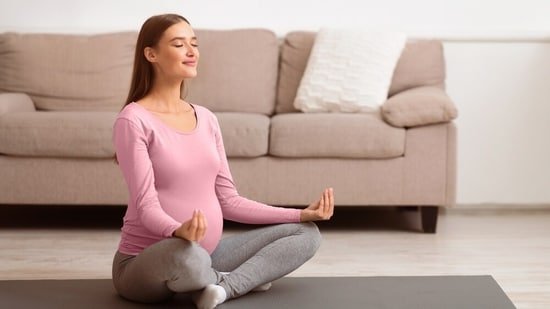
The International Day of Yoga is observed every year on June 21, and the theme for 2026 is ‘Yoga for Healthy Ageing,’ reminding us that yoga is suitable for people of all ages. It helps keep the body agile, active, and flexible. While yoga is discussed for overall health and ageing, it also has an important role in pregnancy.
Pregnancy is a physically sensitive phase, and expectant mothers are generally cautious about movement. As the belly grows and added pressure builds on the back, hips, and pelvis, some activities may begin to feel challenging. Concerns about slipping or strain may remain. However, safe exercises are still advised after medical clearance, as movement is essential even in pregnancy. But what kind of exercise can pregnant women perform safely?
ALSO READ: 3 essential nutrients every pregnant mom should be told more about, by a French biochemist
Dr Sneha Deshpande, senior consultant, obstetrics and gynaecology at Momstory, Pune, with over 16 years of experience, said that yoga is safe during pregnancy, reiterating the value of movement.
“For expecting mothers, it is very important to keep themselves physically and psychologically fit,” she added.
This means pregnancy care is also about maintaining a regular physical fitness routine. Expectant mothers need safe, gentle, and doctor-approved ways to stay safe. This is where yoga can help. More specifically, there is a practice called prenatal yoga, which involves simple postures, breathing exercises, and relaxation techniques designed for pregnancy.
“Yes, prenatal yoga is safe. Yoga in pregnancy is one such exercise that has been proven extremely beneficial not only for the mother but also for the unborn baby,” the gynaecologist said.
Here are some reasons Dr Deshpande outlined in an extensive guide on how prenatal yoga benefits expecting women by targeting specific pregnancy-related concerns and suggested which asanas one can do to get that relief:
1. Improves back pain
- During pregnancy, pressure surges on your spine, hips, and pelvis.
- Prenatal yoga can improve posture and strengthen muscles, helping alleviate common ailments.
- Who benefits: Pregnant women in their second and third trimesters experience relief from lower back pain with the help of stretching exercises.
- Recommended poses: Cat-Cow, Butterfly, and Child’s Pose.
2. Better sleep
- Changes in hormones and nervousness can, at times, interfere with good sleep for pregnant women.
- Yoga practice helps achieve relaxed breathing, which in turn helps the woman relax and sleep better.
- Who benefits: Most pregnant women experience better sleep after engaging in prenatal yoga regularly.
- Recommended poses: Sukhasana (easy pose), deep-breathing exercises, side-lying savasana.
3. Enhances blood flow and decreases swelling
- Pregnant women often experience swelling in their legs and ankles as a result of water retention and poor circulation.
- The gentle postures of yoga aid in enhancing blood flow and decreasing swelling.
- Recommended poses: Mountain pose and modified legs-up-the-wall pose.
4. Makes the body stronger for childbirth
- Prenatal yoga is known to make the pelvis stronger, increasing flexibility, and making labour easier for mothers and making the process of postnatal recovery faster.
- Recommended poses: Malasana (pose of garland), pelvic tilts, and bound angle pose.
5. Helps maintain emotional stability
- Pregnant women often undergo emotional changes.
- Practising yoga will help you achieve mindfulness and maintain emotional stability.
- Recommended poses: Meditation, gentle stretching, and controlled breathing.
While yoga’s importance can be traced back to ancient India, its value is widely appreciated in the contemporary world too. As its global popularity grew, the United Nations declared June 21 as the International Day of Yoga on December 11, 2014. The day aims to educate people about the physical and mental health benefits of practising yoga.
Meanwhile, this guide can serve as an informative starting point. However, pregnant women should consult their gynaecologist first and practise yoga only under the guidance of prenatal yoga specialists.
Note to readers: This article is for informational purposes only and not a substitute for professional medical advice. Always seek the advice of your doctor with any questions about a medical condition
