

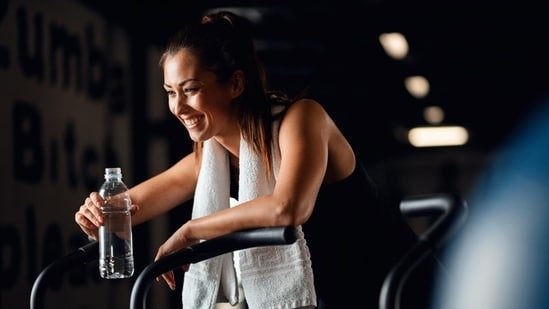
As you burn calories and push through rep after rep and set after set, it is natural to feel thirsty in between. With the body sweating to regulate temperature, hydration also becomes essential. But should you drink water in between your workouts, or can it cause discomfort and affect how you perform and recover?
Addressing this doubt, Dr Aditya Jain, senior consultant at orthopaedics in Fortis Hospital Okhla, unpacked the science behind hydration during exercise.
Should you drink water during workouts?
There is a common misconception that people have about drinking water in the middle of a workout. They worry that it may feel heavy or uncomfortable. Because of this, some avoid sipping water between sets and wait until the workout is over. However, Dr Jain explained that the problem is not drinking water during exercise, but drinking too much water too quickly. When large amounts are drunk rapidly, you may experience heaviness. The best strategy is to take small sips at regular intervals throughout the workout.
Why should you be hydrated during workout?
The question is not whether you should sip water between sets, but rather why hydration matters during exercise in the first place. When you work out, your body sweats to cool down, resulting in fluid loss. So, if you do not replenish the lost fluid, you are at risk of dehydration.
The orthopaedic doctor described the risks of dehydration: “Even mild dehydration can negatively affect physical performance by reducing endurance, strength, concentration, and muscular efficiency.”
Aside from poor physical performance, you are indirectly at a greater risk of injuries. He further added, “Fatigued muscles provide poorer support to joints and may impair coordination and balance, especially during weight training, running, or high-intensity exercises. Reduced neuromuscular control can affect movement quality and increase stress on muscles, ligaments, and joints.”
How do you know if you are dehydrated during workout? Watch out for fatigue, dizziness, headaches, and muscle cramps.
Best source of hydration?
Now, with so many fancy hydration drinks available, from ionised water to alkaline water, should you consider them for workout hydration? The doctor, however, assured that plain water is enough to replace the fluid lost through sweat. But if your workout session is longer, if you are sweating excessively, or if you are exercising outdoors, then electrolyte replacement may be beneficial.
Note to readers: This article is for informational purposes only and not a substitute for professional medical advice. Always seek the advice of your doctor with any questions about a medical condition.
