

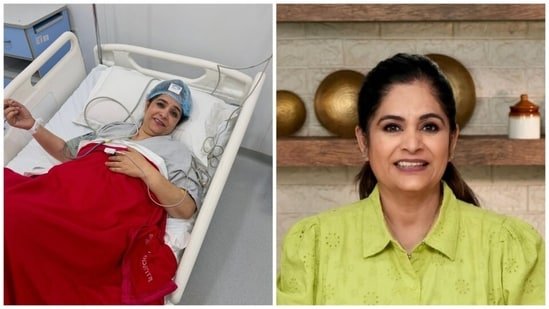
Pankaj Bhadouria, chef and winner of MasterChef India season 1, has shared an Instagram post on her diagnosis of breast cancer. On May 28, she posted an image from a hospital bed, signalling the beginning of her treatment journey. Also read | Breast Cancer Awareness Month: Doctor reveals 5 early breast cancer symptoms women often overlook
In a brief but poignant caption that garnered an outpouring of love from fans and colleagues alike, Pankaj wrote: “I have been diagnosed with breast cancer. Need your prayers and support.”
Pankaj joins a list of famous women — including actors Hina Khan, Sonali Bendre, and Chhavi Mittal — who have used their platforms to strip away the stigma surrounding breast cancer and highlight the critical nature of early detection. Also read | Hina Khan recalls how a falooda became ‘turning point’ for her on the day of breast cancer diagnosis
Understanding breast cancer
Breast cancer remains a primary health concern for women internationally. In a 2018 interview with HT Lifestyle, Dr Tushar Jadhav, consultant of surgical oncology at Fortis Hiranandani Hospital, at the time, shared that the statistics are a stark reminder of the disease’s prevalence.
“Breast cancer accounts for 25 percent of all female cancers diagnosed worldwide. It is the most common cause of cancer death among women, across the globe,” Dr Jadhav noted. While the diagnosis can be daunting, medical experts highlight that heredity is not the only factor.
In fact, Dr Jadhav pointed out that ‘less than 10 percent of factors are hereditary’. Other contributors include habitual smoking and alcoholism, lack of physical activity and low-fibre diets. “Nulliparity (condition in which a woman has never given birth), elderly first pregnancy, and hormonal replacement therapy,” Dr Jadhav added.
Identifying the signs and symptoms
Early detection is the most powerful tool in a patient’s arsenal. Experts urge women to be vigilant about physical changes. Dr Sandeep Bipte, consultant breast onco-surgeon at Fortis SL Raheja Hospital, at the time, highlighted the specific red flags in the same interview.
“A lump in the breast or armpit, nipple retraction (especially on one side and recent onset), blood-stained nipple discharge, change in size of the breast, and sometimes redness on the breast like orange peels, are advanced signs of breast cancer,” Dr Bipte warned. Other subtle indicators can include a persistent feeling of heaviness in the breast or unexplained, sudden weight loss. Also read | Oncoplastic surgeon shares why breast cancer is rising among younger women and the early signs we often overlook
Breast cancer detection and treatment
Doctors rely on a ‘triple assessment’ for a definitive diagnosis: clinical examination, imaging, and pathology. “Imaging, such as ultrasonography, digital mammography, image-guided core biopsy, and histopathology examinations on biopsy, can confirm the diagnosis,” said Dr Jadhav.
Experts recommend that breast self-examinations begin as early as age 20, performed once a month, with professional mammograms becoming a staple every three years after age 47-50 – if caught early, the prognosis is often optimistic. Regarding the road to recovery, Dr Bipte shared: “The treatments include surgery, chemotherapy, radiation therapy, hormone therapy or targeted drug therapy. But, the mainstay of treatment in early cancer is surgery.”
For many patients in the early stages, ‘breast conservation surgery’ — which involves removing only the affected tissue rather than the entire breast — is often an option, though doctors stress that the final plan ‘depends upon the patient’s clinical presentation and the stage of the disease’.
As Pankaj begins her medical journey, her transparency serves as a vital reminder to her millions of followers: early screening is not just a medical recommendation — it is a life-saving necessity.
Note to readers: This article is for informational purposes only and not a substitute for professional medical advice. Always seek the advice of your doctor with any questions about a medical condition.
