

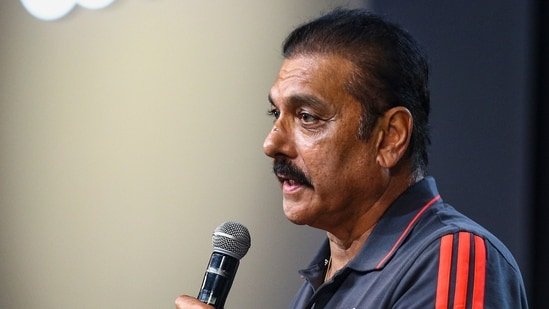
Ravi Shastri has been a household name in India for more than four decades. For the older generations, he came into the scene as a left-handed spin bowler who turned into an all-rounder, and was a member of the World Cup-winning 1983 Indian National Cricket Team.
For the younger generations, he has been the commentator who never holds back, and the former head coach who had a reputation for shooting straight and often. Born Ravishankar Jayadritha Shastri, he celebrates his birthday every year on May 27.
To commemorate the day, today’s quote is from one of his interviews as the head coach of the Indian National Cricket Team, a position he held from 2017 to 2021. The quote reads: “For me, what you see is what you’ll get. I always like to call a spade a spade and people who have played with me know me fully well.”
The meaning of Ravi Shastri’s quote
As a man who is known not to mince his words, Shastri’s quote does not really need an explanation. He is a fan of speaking from his heart, something that has often landed him in awkward situations but earned him fans across the globe.
He is also one of the treasured people whom one could trust as a presenter or narrator to tell things as is, without gatekeeping any information. His words are loaded with his truth and have been a source of humour, introspection, and controversy. But that has never stopped him from continuing to belt bangers out.
What is the significance of Ravi Shastri’s quote?
In a world where people are always measuring their words for an uncountable number of reasons, be it for hiding the truth or promoting a lie, a reminder that people like Shastri still prefer calling “a spade a spade” serves as a motivation for us all.
Ascertaining the objective truth is a difficult endeavour that not everyone can be expected to undertake. However, the ability to voice one’s own personal truth is present within us all. Shastri’s quote and his popularity prove that even today, authenticity has its place in the human heart.
The ability to be true to oneself and to others is a virtue. It is something that is not often seen among public figures, which allows them to skirt past accountability. The quote highlights how its presence can help one’s words carry the weight that often money cannot buy.
