

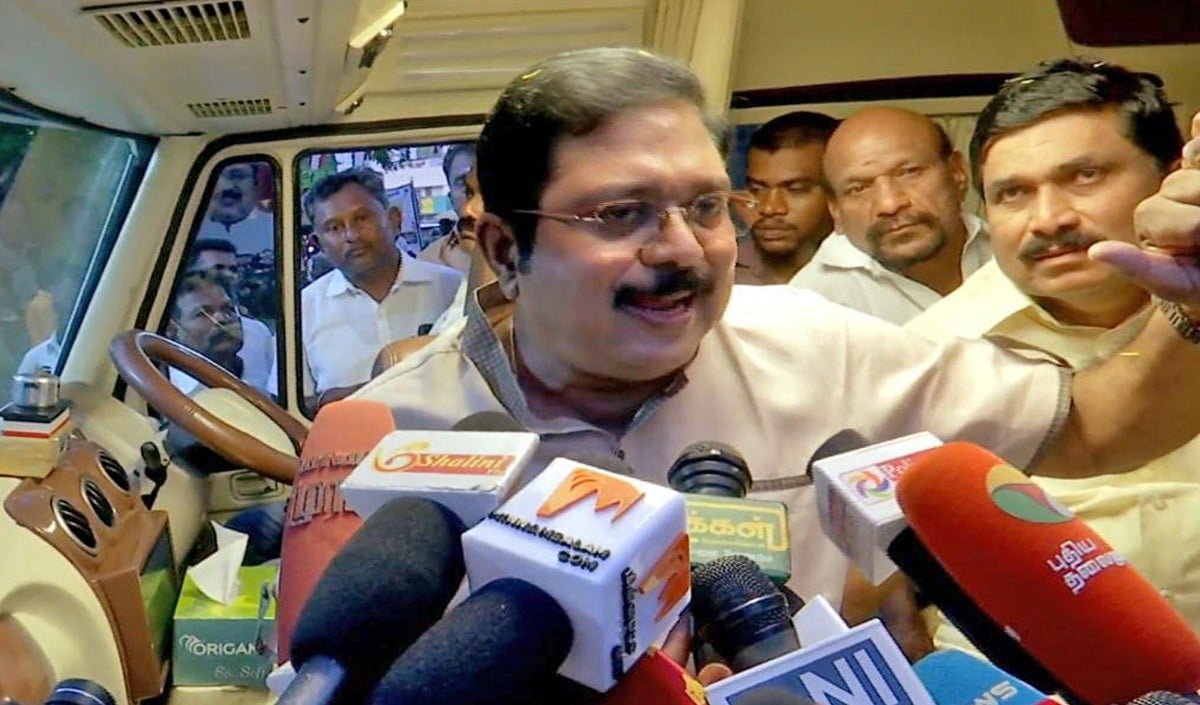
तमिलनाडु में पहली गठबंधन सरकार बनाने के विजय के गठबंधन का समर्थन करने से इनकार करने वाली पार्टी के टीटीवी दिनाकरन ने दावा किया है कि टीवीके द्वारा प्रदर्शित समर्थन पत्र जाली है। एएमएमके के महासचिव ने विजय के नेतृत्व वाली तमिलगा वेट्री कज़गम (टीवीके) को अहंकारी और घृणास्पद भी कहा है। बहुमत के लिए संघर्ष कर रही टीवीके ने पहले एक कार्यकारी गठबंधन बनाने के लिए अम्मा मक्कल मुन्नेत्र कज़गम (एएमएमके) से उसके एकमात्र निर्वाचित विधायक कामराज एस का समर्थन मांगा था।
इसे भी पढ़ें: Tamil Nadu का सियासी दंगल! TTV दिनाकरन ने विजय की TVK के खिलाफ दर्ज कराई FIR, ‘फर्जी’ पत्र और ‘वीडियो’ वॉर शुरू
बाद में पार्टी ने दावा किया कि कामराज ने उनका समर्थन करने पर सहमति जताई थी और समर्थन पत्र भी दिया था। एक वीडियो भी प्रसारित किया गया, जिसमें टीवीके ने दावा किया कि कामराज को एक दस्तावेज़ पर हस्ताक्षर करते हुए देखा गया था। दिनाकरन ने वीडियो को फर्जी और एआई-जनरेटेड बताकर खारिज कर दिया। उन्होंने आज सुबह एक प्रेस कॉन्फ्रेंस में सवाल किया कि यह वीडियो किसने रिकॉर्ड किया? विजय, बुस्सी आनंद, के.ए. सेंगोत्तैयान, वेंकटरामन पी या सी.टी.आर. निर्मल कुमार? यह कहां रिकॉर्ड किया गया था?
वरिष्ठ राजनेता ने कहा कि समाचार रिपोर्टों से यह जानकर उन्हें गहरा सदमा लगा कि एएमएमके विधायक ने विजय को अपना समर्थन दिया है। उन्होंने यह भी पूछा कि अगर टीवीके को यह समर्थन प्राप्त था तो उन्होंने कामराज को राज्यपाल के पास क्यों नहीं ले गए। उन्होंने आगे कहा कि टीवीके भ्रम पैदा करने की कोशिश कर रही है। उन्हें विधायक का मूल पत्र दिखाना चाहिए। यह मूल पत्र नहीं था।
इसे भी पढ़ें: Tamil Nadu Politics | तमिलनाडु का राजनीतिक ड्रामा! विजय और दिनाकरन के बीच ‘नंबर गेम’ की जंग, फर्जी पत्र और वीडियो वार ने बढ़ाया सस्पेंस
एक दिन पहले एनडीटीवी से बात करते हुए उन्होंने संकेत दिया था कि यह बहुमत हासिल करने के प्रयास में विधायकों की खरीद-फरोख्त का प्रयास भी हो सकता है। एएमएमके और आईयूएमएल द्वारा विजय को समर्थन न देने से टीवीके तमिलनाडु में गठबंधन सरकार बनाने में असमर्थ है। अब सबकी निगाहें थोल थिरुवलवन के नेतृत्व वाली वीसीके पर टिकी हैं, जिसके दो विधायक हैं और जो विजय को बहुमत दिलाने में मदद कर सकती है।
