

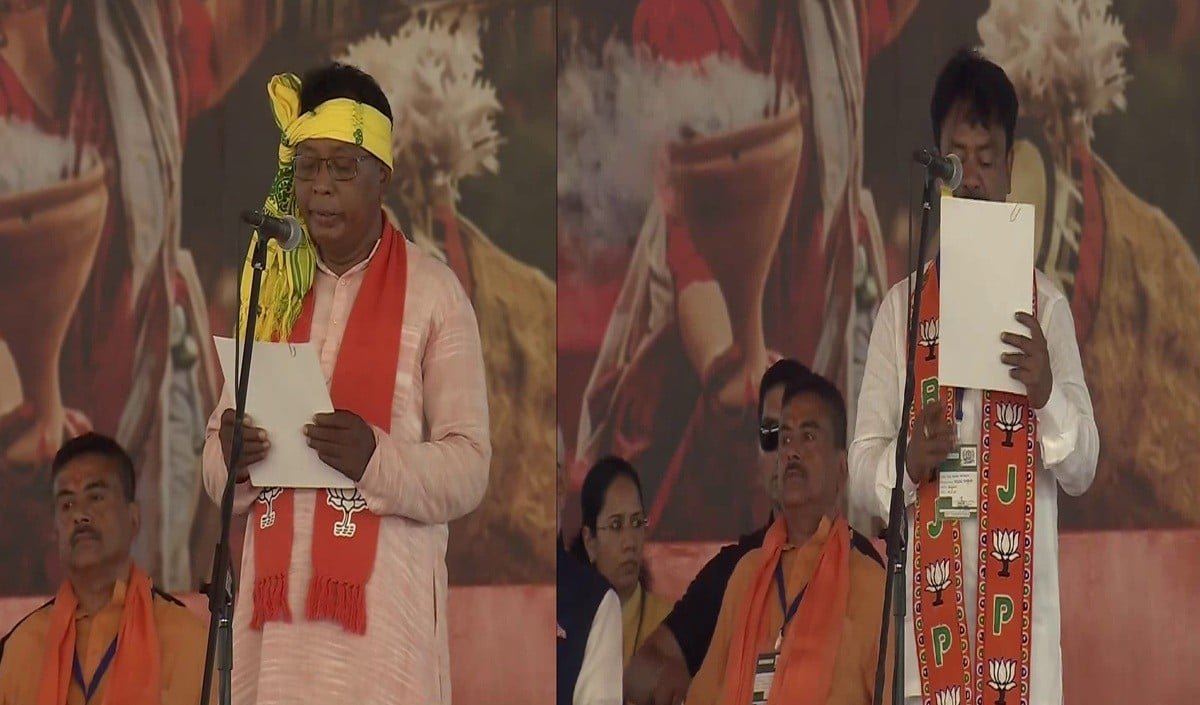
शुभेंदु अधिकारी ने आज पश्चिम बंगाल के पहले भारतीय जनता पार्टी (भाजपा) मुख्यमंत्री के रूप में शपथ ली। रवींद्रनाथ टैगोर की जयंती पर विशाल ब्रिगेड परेड ग्राउंड में आयोजित इस समारोह ने तृणमूल कांग्रेस के 15 वर्षीय शासन के निर्णायक अंत और पार्टी द्वारा वर्णित दोहरे इंजन युग की शुरुआत का प्रतीक बन गया। हालाँकि सभी की निगाहें अधिकारी पर टिकी रहीं, वहीं पांच प्रमुख मंत्रिमंडलीय सहयोगियों की नियुक्ति ने नए प्रशासन की रणनीतिक दिशा का संकेत दिया। वहीं, भाजपा विधायक अशोक कीर्तनिया और क्षुदिराम टुडू ने पश्चिम बंगाल के मंत्री पद की शपथ ली।
कौन हैं अशोक कीर्तनिया और क्षुदिराम टुडू
अशोक कीर्तनिया
बंगाओन उत्तर निर्वाचन क्षेत्र से मतुआ समुदाय का प्रतिनिधित्व करने वाले कीर्तनिया का मंत्रिमंडल सूची में शामिल होना अनुसूचित जाति के मतदाताओं और शरणार्थियों के कल्याण के प्रति सरकार की प्रतिबद्धता को दर्शाता है। उनका संबंध व्यापार और स्थानीय संगठनात्मक राजनीति से है।
इसे भी पढ़ें: अभिषेक से टकराव, 2020 का वॉट्सऐप मैसेज और इस्तीफा, Suvendu Adhikari ने कैसे लिखी ममता सरकार के अंत की स्क्रिप्ट?
5. क्षुदिराम टुडू
जंगल महल क्षेत्र के एक प्रमुख आदिवासी नेता टुडू का शपथ ग्रहण समारोह भाजपा के राज्य के आदिवासी क्षेत्रों के विकास पर केंद्रित दृष्टिकोण को उजागर करता है, जिसका उद्देश्य ऐतिहासिक रूप से हाशिए पर पड़े जिलों में लंबे समय से प्रतीक्षित प्रगति लाना है।
अधिकारी स्वयं ब्राह्मण हैं। राजनीतिक विश्लेषकों का मानना है कि विभिन्न जाति पृष्ठभूमि से पहले छह मंत्रियों का चयन भाजपा द्वारा दिया गया एक अप्रत्यक्ष संकेत है कि नई राज्य सरकार बिना किसी भेदभाव के सभी जाति पृष्ठभूमि के लोगों को समान रूप से महत्व देगी। याद रहे, जब भी केंद्रीय गृह मंत्री अमित शाह चुनाव प्रचार के लिए बंगाल जाते थे, उनसे पूछा जाता था कि पश्चिम बंगाल में भाजपा शासित पहली सरकार का मुख्यमंत्री कौन होगा। शाह किसी का नाम लेने के बजाय हमेशा यही कहते थे कि नया मुख्यमंत्री इसी भूमि का पुत्र, बंगाली होगा और उसने अपनी शैक्षणिक शिक्षा बंगाली माध्यम से प्राप्त की होगी।
