

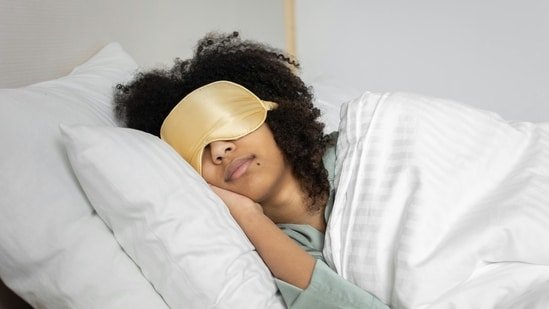
Do you also like to slide on a cosy, silky eye mask as yoy sleep? It blocks the light out, and the soft, cushiony feel against your eyelids feels calming, and you think it creates a conducive environment for sleep to lull you in. But are there any lurking health risks that may result in ailments or conditions showing up later on? In fact, putting on sleep masks has become a common practice when it comes to bedtime routine. Let’s take a closer look and evaluate if this is a safe habit, and if not, what can you do to rectify it.
ALSO READ: Swimming this summer? Ophthalmologist shares 4 eye protection tips: ‘Never rub your eyes…’
HT Lifestyle reached out to dermatologist, Dr Anindita Sarkar, chief medical officer at Clinikally, who helped break down the implications of wearing a sleep mask to bed.
Aside from blocking light, a sleep mask has another function, which the dermatologist referred to as gentle periocular warming, a mild increase in warmth around the eye area that helps soothe you so you can fall asleep faster. But what does this mean for the skin around your eyes?
The dermatologist believed the impact is obvious because the skin around the eyes is the thinnest and therefore more vulnerable, especially since eye masks sit tightly around the head for a long period, almost six to eight hours, which, according to Dr Sarkar, creates a ‘microenvironment of warmth and occlusion.’
Now, let’s see the adverse impacts:
How does an eye mask affect your skin?
1. Irritation
Since the eye mask is tight, the dermatologist warned that it may cause irritation, such as marks and redness, especially due to friction. The doctor reminded that the role of the material is also instrumental in driving irritation, saying, “Especially if the mask is made up of synthetic or rough materials,” she said.
2. Hyperpigmentation
If you observe, as you sleep, the eye mask sits close to the skin and rubs against it; the bands from the temple also cause pressure near the eyes. Dr Sarkar warned that this may affect texture and pigmentation: “Repeated rubbing or tight elastic bands contribute to frictional hyperpigmentation, especially for individuals with darker skin tones who are prone to pigment changes.” It shows that the skin around the eyes is very delicate and reacts quickly, especially when the eye mask is tight or when it moves during sleep, leading to darkening of the skin around the eyes.
3. Allergic reactions
One may also suffer from allergic reactions, especially periorbital allergic dermatitis, which happens because of dyes, fragrances, adhesives, elastic bands or latex or nickel components in masks. The dermatologist urged the patients to look for symptoms like itching, swelling, redness, and flaky skin.
4. Irritant contact dermatitis
The doctor also warned about irritant contact dermatitis, which occurs due to prolonged exposure to sweat, oils, and detergent residues that remain trapped beneath the mask. This happens when you do not wash your sleep mask.
Then the doctor mentioned some specific vulnerabilities, where certain sleep mask users may develop white cysts. She described, “Some may also develop small white cysts called milia, that form when keratin becomes trapped beneath the skin.”
Similarly, another vulnerable group is people with chronic eczema who may experience a flare-up of eyelid eczema due to triggers like sweat, humidity, bacterial buildup and allergic constituents often present in the eye masks. They may see itching, swelling, redness and flaking, often accompanied by a slight wrinkled appearance.
Can you safely wear a sleep mask?
With so many potential irritations, infections and conditions, doubts arise whether one should use or discard completely, but the dermatologist assured that one can still use an eye mask, but with a few healthy adjustments.
Here are some of her safety tips:
- Choose masks with breathable fabrics: Recommended to use breathable fabrics like silk or soft cotton to ensure skin is less likely to get irritated and enable better airflow.
- Avoid scented eye masks: Ensure you choose latex-free and fragrance-free options to reduce the risks of allergic reaction.
- Ensure proper fitting: Eye masks should sit gently without excessive pressure or tight elastic bands. A snug but comfortable fit minimises friction while still blocking light effectively.
- Maintain proper hygiene: Regular washing of the eye masks prevents the buildup of sweat, oils, and allergens that can trigger irritation. It is always recommended to use mild, fragrance-free detergents for effective cleaning.
- Be careful when you use heavy, thick creams: If one uses dermatologist-approved rich night creams or occlusive skincare products, pairing them with a tightly sealed mask can increase the likelihood of clogged pores and milia formation.
Note to readers: This article is for informational purposes only and not a substitute for professional medical advice. Always seek the advice of your doctor with any questions about a medical condition.
