

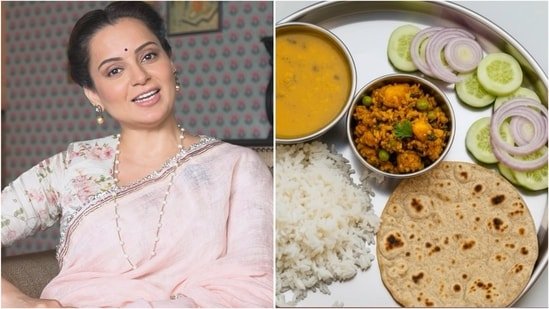
Actor and politician Kangana Ranaut recently shared a powerful message on the importance of balanced nutrition, encouraging people to adopt healthier eating habits by choosing local and seasonal foods.
Dressed in a pastel pink saree paired with a floral blouse, Kangana in her May 4 Instagram video, highlighted how everyday Indian staples together create a wholesome and balanced diet that nourishes both the body and mind. (Also read: Kangana Ranaut says ‘I was horrified’, shares her experience of getting first period: ‘Bedsheet was full of blood’ )
Kangana Ranaut on the power of balanced, colourful plate
“Millets like jowar or bajra, rice, lentils or rajma, green vegetables and seasonal fruits, curd, milk, and a little bit of ghee, this is not just food, it is a balanced diet that gives nourishment to the body and strength to life,” Kangana said.
She further stressed the importance of eating a colourful and diverse diet for overall wellbeing and immunity. “When our plate is colourful, only then do the mind and body receive complete nutrition. Energy, strength, and immunity all come from this,” she added.
‘Eat local, eat seasonal’
Kangana also underlined how nutrition plays a crucial role in the lives of women and children, saying their health directly impacts the future of families and communities.
Urging people to make mindful food choices, Kangana concluded with a call to embrace local and seasonal eating habits. “So let us all come together and take a pledge, we will eat local, eat seasonal, and make our plates colourful, because the right nutrition brings a brighter tomorrow,” she concluded.
What a balanced Indian thali should look like
According to Dr Naveen Bhamri, Director & HOD (Interventional Cardiology), Max Super Speciality Hospital, Delhi, a truly heart-healthy Indian thali is all about balance, much like an orchestra where every element plays its role in harmony. He recommends structuring the plate with 50% vegetables and salads, preferably colourful and seasonal, as they provide essential vitamins, minerals, and fibre that support overall health and heart function.
The remaining 50% should be evenly split between complex carbohydrates and protein. Dr Bhamri suggests including 25% complex carbs such as roti made from jowar, bajra, millets, or a small portion of brown rice, while the other 25% should come from protein sources like dal, rajma, chana, paneer, fish, or chicken. He also cautions that items like pickles, papad, and chutneys should be kept minimal, describing them as occasional “guest appearances” rather than main components of the meal. Click here to read the full article.
Note to readers: This report is based on user-generated content from social media. HT.com has not independently verified the claims and does not endorse them.
This article is for informational purposes only and not a substitute for professional medical advice.
