

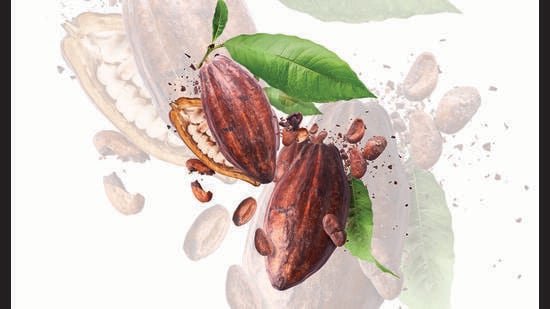
What you are seeing, dear reader, is the second version of this week’s Rude Food. I have been meaning to write about chocolate for many months. But things took an unexpected turn along the way and I had to junk the piece that I first intended to write.
It all started when the global prices for cocoa, the raw material that gives us chocolate, shot up. They reached such high levels that most manufacturers who used chocolate for popular and easily procured chocolate snacks began panicking. Chocolate bars became unaffordable. So they looked for substitutes.
This is not as hard as it may seem, because the popular definition of chocolate has always allowed for cheaper substitutions and variations. I should know, because I have spent years being indignant about what I considered lower forms of chocolates.

For a long time, I lectured readers on the purity of chocolate and urged them to only buy chocolate bars that contained high levels of cocoa. I did not insist on 80% cocoa content, which many chocolate snobs regard as an acceptable level, but I pointed out that many easily available bars had such low levels of real chocolate that they had no right to even use the term chocolate in their packaging.
I sneered at white chocolate, which I said wasn’t really chocolate at all. (It isn’t, because it doesn’t contain cocoa solids but, as we shall see, that doesn’t bother me much any longer.) I was snobbish about milk chocolate, which I didn’t like very much. I approved of pastry chefs who used such fancy chocolate as Valrhona. I found myself increasingly using such technical terms as ganache, fat bloom and couverture. I talked about the merits of single-origin chocolate (if you don’t know what that is, don’t let it bother you). I stopped just short of discussing the fine taste of chocolate from Ghana compared to chocolate from Ecuador.

In other words, I became a caricature chocolate snob.
Then, when I finally got down to writing the column about how high raw-material prices had caused our chocolate makers to resort to short cuts, two unusual things happened.
First cocoa prices plummeted. The crisis was over. Normal production could resume. The story I had researched for so many months no longer existed.
And second, the more I researched the subject, the less enamoured I became of the distinction between snobby ‘real chocolate’ and the stuff that most of us enjoy.

I have been a chocolate lover for years: My fridge at home is full of chocolate. Some of this chocolate is the moulded and filled variety that is made by great chocolatiers in such countries as Belgium. On the whole, these boxes of fancy chocolate tend to be gifts. I have long been suspicious of chocolate imperialism and am unwilling to spend large sums of money on expensive European chocolates.
It’s because Europeans themselves have long told us that terroir is everything. For instance, wine is not really about the choice of grapes. It’s not even about the wine maker. Wine is about terroir. The same grape handed to the same wine maker, but grown in a different region, will yield a totally different wine because the terroir is different.
And yes terroir does make a difference to the wine. But I have always been intrigued by the refusal of Europeans to acknowledge the terroir of chocolate. Surely, the same principle should apply?

As we all know, no chocolate is grown in Switzerland or Belgium. The raw material is imported from poor countries in South America or Africa. The White people who import it then turn it into chocolate. Later, they sell it as Swiss chocolate or Belgian chocolate.
Just turn this around. Suppose I grew some grapes in Haryana, took them to Burgundy and made wine from them. Would I be allowed to call this French wine? No, of course not. I would be arrested if I tried to sell this ‘French wine’.
And yet that’s exactly what the Belgians do when they take the cocoa beans from say, Africa, and create their moulded chocolates in Brussels. The Africans never get a look in. There is no more talk of terroir, and the world raves about expensive Belgian or French chocolates.
The more I researched stories about Brooklyn hipsters who made overhyped chocolates or about White people who had come to India to make chocolates for the natives, the less interesting I found the story.

By going on and on for so many years about the purity of so called ‘real chocolate’, had I made the mistake of taking the joy out of chocolate? Shouldn’t chocolate be about fun? It’s a childhood pleasure that grows with us. By injecting snobbery and claims about artisanship into chocolate, weren’t we destroying the happiness and innocence that chocolate should be associated with?
I decided that there were two ways of looking at chocolate. You could see it as a product, assess its purity and pay lots for it. That attitude may make sense for pastry chefs and food snobs.
Or, you could see chocolate as a flavour, as a way of making things more delicious. I thought about all the ways I consumed chocolate when I was not biting into bars of high-cocoa-content chocolate and trying to judge it as though it had the complexity of fine wine.
In truth, most of the chocolate I ate came in the form of thin layers of deliciousness in other products. There is only a thin layer of chocolate coating the wafers of a Kit-Kat. Likewise, with dark chocolate digestives, the only biscuits we eat regularly at home. Our fridge is full of Snickers bars in various sizes. And yes, even they only have thin chocolate coverings.

Isn’t the best part of M&Ms (or a Smartie or a Gem) the stage when the candy covering melts away and the chocolate hits your tongue?
What about chocolate bars? I stopped spending money on high-chocolate-content bars when I finally accepted that the bars that really made me happy were Fruit & Nut. As a child, I loved Cadbury’s Snack (now sadly discontinued) because the biscuit centre merged so well with the chocolate covering. And what about the crunchy almond-rock chocolate that Mumbai pastry shops would sell? The chocolate probably had a dubious composition, but when paired with the nuts (it actually works even better if you substitute peanuts for the almonds) it gave you the most satisfying crunch. How about the chocobar ice-cream I grew up on (something like today’s Magnum), in which the chocolate was no more than the crisp layer of edible packaging?
Are we to turn our backs on all of those simple joys to bite into some bittersweet high-cocoa-concentration bar? Should we spend so much money on small moulded chocolates filled with a gooey mess by some Belgian chocolatier?
I reckon that the beauty of chocolate is that we don’t have to choose. Unlike say, wine, where the cheap stuff can be foul, chocolate gives you pleasure at all price points and in all forms.
I have had my fling with expensive, grown-up chocolate. And now I have returned to the simple delights of the chocolate of my childhood.
It actually makes me so much happier!
From HT Brunch, May 2, 2026
Follow us on www.instagram.com/htbrunch
