

Now is a good time to talk about Salman Toor. The Pakistan-born, US-based artist is the darling of the NYC art scene and is set to have a major solo show in London this year. He also, in 2007, painted a portrait of NYC’s mayor, Zohran Mamdani, another NYC darling of the moment.
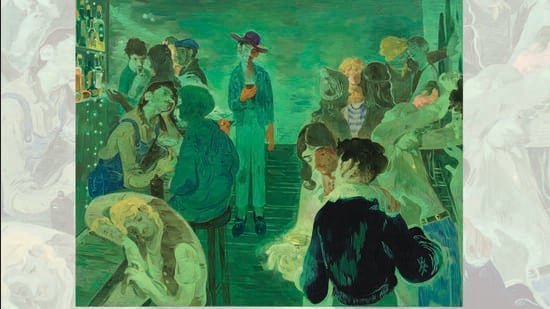
Toor’s 2019 painting, Bar Boy, is a sumptuous place to start. It’s large – a 48-inch-by-60-inch oil on wood. And it seems to capture a joyous celebration with several figures mingling at a social gathering. Some are chatting, some are drinking, others are surreptitiously coiled in intimate embrace, a few seem exhausted from heavy partying. A solitary figure stands amidst this scene, lost in the bright light of his smartphone.
As always, look closer. The central figure is the only Brown man in the room full of White people. He seems isolated from the revelry. The scene itself looks much like those of European painters, which makes the man stand out even more, his lack of connection to his surroundings even more acutely felt.
This is Toor, doing with paint what Brown authors, musicians, fellow painters and filmmakers have been doing for generations – processing the South-Asian diasporic experience. Toor, additionally, is queer. Go back and look at the people in that bar. They’re all men.
Toor grew up in Lahore in a traditional family. So, when he moved to Ohio to study, he underwent both a cultural shock and an artistic reawakening. The academic realism of European art (particularly Rococo, Baroque and Neoclassical styles) are obvious inspirations. But Toor uses them to present his own reality as South Asian, queer and beyond.
Toor draws from his own life and experiences, from the inside of his mother’s bedroom (where he felt safe, while growing up gay in Pakistan), to airport security staff. But look at Man With Face Creams And Phone Plug (2019), in the collection of NYC’s Whitney Museum of American Art. No bar crowd here, just a man – brown of skin and noble of bearing with an exaggerated aquiline nose – is surrounded by innocuous personal items such as skincare, towels, a disconnected phone plug. But a profound disquiet hangs over the scene. The sense of loneliness is overwhelming.
Painters will wonder how Toor achieves such strong, thick brushstrokes. He works with a long contraption of multiple brushes tied together, which he manoeuvres with his elbows. That and the liberal use of emerald greens, make Toor’s works entirely his own.
South Asian artists don’t always seek to assert their identity in their work. Often it is an invitation for others to understand what those of us who straddle different cultures feel. Toor’s work draws me to it for similar reasons. In East Village Apartment II (2017), he depicts a man at home on his sofa, with a glass of wine, chilling, but with an uneasy expression as he looks on to the vast city below. It’s a good example of how Toor captures the isolation of being an outsider, made to assert his identity in a space that doesn’t always appreciate it.
And yet, he has none of the cliches of the Brown artist in a White world. He picks up from the culture he inhabits and embraces new ideas around sexuality and gender. That, to me, is what makes his South Asian identity an asset rather than a mere box to be ticked.
ARTIST BIO: Jonathan Avinash Victor’s work explores subconscious narratives, especially the search for meaning and beauty.
From HT Brunch, May 2, 2026
Follow us on www.instagram.com/htbrunch
