

Be honest. Didn’t you want a secret identity when you were growing up? A Batman to your Bruce Wayne. A Hannah Montana to your Miley Stewart. One of those guys from the Spider-verse, at the very least. But IRL, secret identities are now more trouble than they are worth.
Finding Satoshi, a new documentary, follows a four-year investigation led by author William D Cohan and private investigator Tyler Maroney to uncover the identity of Satoshi Nakamoto, the man who created Bitcoin in 2009. It makes the case that Hal Finney and Len Sassaman created the OG cryptocurrency.
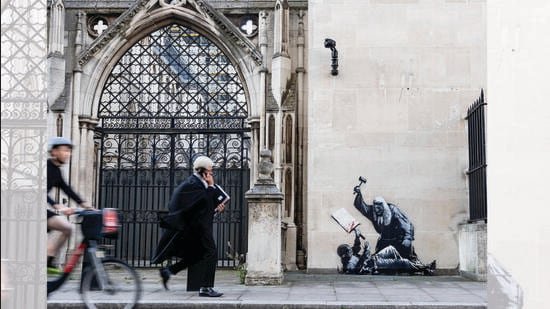
Meanwhile in the UK, a quest to learn the identity of British street artist Banksy has sent journalists from the UK to Ukraine to Manhattan and God knows where else. No, we still don’t know who he or she is for sure. In Italy, fans of the novelist who publishes under the name Elena Ferrante have been furiously reading between the lines, logging into online forums and figuring out who she might be, from her references to neighbourhoods in Naples. She may or may not be the literary translator and library director Anita Raja.
And even though fans know that Talwinder Singh Sidhu performs as Talwiinder, they still urge him to take his skull mask offstage. In the gaming fandom, sometimes all it takes for a streamer to reveal themselves is “guys, just one million likes”.
Who cares? We’re obsessed with reveals and unmaskings when, for much of human history, great art has been created by people we simply don’t know. Who painted the murals in Ajanta as far back as the 2nd century BCE or etched those gigantic Nazca lines in Peru in between 500 BCE and 500 AD? Who sketched the Hall of the Bulls in the Lascaux cave 17,000 years ago? Who’s behind all those unsigned but exquisite Mughal miniatures?
Even when artists had the chance to sign their canvases, many didn’t. They never knew which disgruntled patron would come charging at them because they just didn’t like the work. We hide behind pseudonyms too – obviously @DietSabya is not the fashion-gossip creator’s actual name. And most trolls hide their identities when they spread hate online.
And yet, we never tire of unmasking. The Daily Mail claimed to know Banksy’s identity back in 2008. Some Italian journalists tried to doxx Elena Ferrante in 2016, prompting author Zadie Smith to remind them that the public has no right over a writer’s identity. “Public influence does create accountability, especially when money, institutions, political messaging and cultural authority are involved,” says cultural studies researcher and educator Prerna Subramanian. “But transparency cannot become a universal demand without asking who gets endangered by visibility. The question is not simply ‘Should artists reveal themselves?’ The harder question is: Who benefits from exposure, and who pays for it?”
It shouldn’t matter who’s behind the Gorillaz and what the members of Daft Punk look like. Mumbai graffiti artist Minor Offence shows his face in his videos. But largely, a separate identity allows creators to free the art from the artist. Anonymity lets expression run unhindered. The mystery is protection from discrimination. And it’s part of the fun.
“Art simply does not belong to a single person,” says Khatra, a graffiti and mural artist from Vadodara. An artwork wrapped up in a person can sometimes lose its intrinsic value. Any piece of art can seduce, move and inspire us. If it has done that job, we can lay off playing detective for a while. The economy’s so harsh anyway. Why take another profession out of business?
From HT Brunch, May 2, 2026
Follow us on www.instagram.com/htbrunch
