

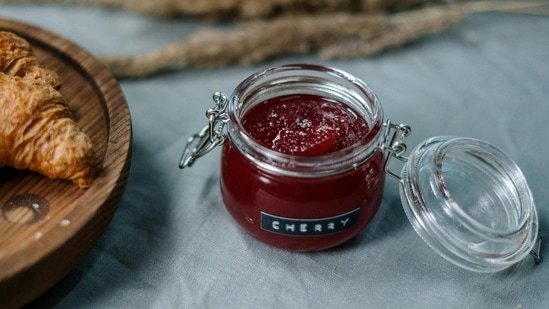
Jelly is a favourite ingredient for people of all ages, but the high sugar content does not make it a healthy food option. However, taking to Instagram on April 24, Dr Joseph Salhab, a board-certified gastroenterologist and health influencer, shared a recipe for homemade jelly that turns it into a gut-friendly option. The recipe takes just two ingredients to make and can be prepared within 10 minutes.
Also Read | Lifestyle expert shares top 5 foods that help stay cool and healthy in summer: Cucumber, mint, and more
High-fibre fruit jelly recipe
Ingredients:
Method of preparation:
- Mix both ingredients together quickly and well so it does not clump.
- Let it sit for five to 10 minutes until it thickens into a jelly.
- Enjoy it on yoghurt, on a nut butter sandwich, or just eat it straight.
Dr Salhab noted in the caption that the high-fibre fruit jelly can be made with almost any pure fruit juice, such as cranberry, cherry, or blueberry. The healthy choice would be one without added sugar or fresh homemade juice. He used tart cherry juice in the demonstration, which contains polyphenols, has anti-inflammatory properties and supports gut health.
Highlighting the benefits of the second ingredient, the gastroenterologist stated, “Psyllium is just a miracle supplement for your gut. It works for heartburn because of the fibre, and helps with both constipation and diarrhoea because of the insoluble and soluble fibre mix. And if you are not a fan of drinking it, this is amazing. You can’t taste it, you don’t even know it’s there.”
The recipe mentioned above provides eight to 10 grams of fibre.
Benefits of dietary fibre
Whole fruits are considered to be better than fruit juices since the latter have the dietary fibre of the fruits removed. This causes blood sugar spikes followed by the inevitable crashes and low satiety. However, Dr Salhab’s jelly recipe solves the problem by introducing psyllium husk as a replacement for the natural fruit fibre.
There are two types of dietary fibre. Psyllium mostly contains dietary fibre, which dissolves in water. According to the Mayo Clinic website, it forms a gel-like material in the stomach that slows down digestion and can help lower cholesterol and blood sugar.
The second type is Insoluble fibre, which, as the name suggests, does not dissolve in water. It supports the movement of material through the digestive system and adds bulk to stool. Foods rich in this fibre include whole-wheat flour, wheat bran, and cruciferous vegetables.
Note to readers: This report is based on user-generated content from social media. HT.com has not independently verified the claims and does not endorse them.
This article is for informational purposes only.
