

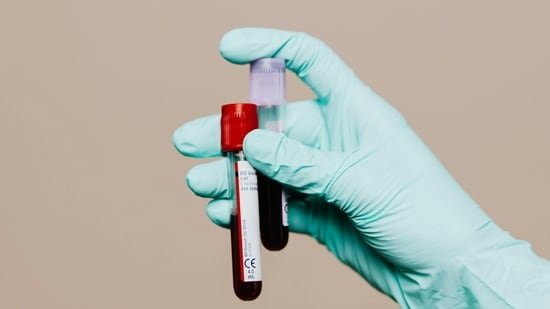
Regular testing is a part of lifestyle habits one should adopt to keep a check on their health. A basic blood panel gives you a general idea about your health, including blood sugar levels, fasting sugar, your thyroid, and even kidney health. But what if the same test from different labs gives you different results on the same day?
On April 26, influencer Ayesha Raje Goyal shared a video on Instagram about running an experiment with her mom: they visited three different blood-testing labs in Mumbai and had her mom’s thyroid levels tested to see if there would be a difference. Though Ayesha thought that the levels would be similar, they were not even close.
3 labs, 3 different results
According to Ayesha, she took her mom to 3 labs within two hours to test her thyroid levels. The reports varied drastically: “Her TSH ranges from 0.79 to 1.06. I would say that’s still decent. Free T3, this was the one I was happiest about; there’s barely any gap. Free T4 shows a 41% gap on the same blood, so not the best. Then, anti-TPO was the surprising one because it went from 148.7 to almost double the limit. That’s a huge variation. This was expected because she has Hashimoto, but this wide range was quite surprising.”
Ayesha sent her mother’s reports to two doctors to understand why the results varied between the three labs. They told her that it is important to always check that the lab you’re going to is NABL-certified. “The surprising statistic I came across was that India has 2.5 lakh diagnostic labs. But only 2,200, roughly, are certified by NABL,” she added.
She further highlighted a website (nabl-India.org) where one can enter their city and verify whether the lab is certified. Furthermore, she added that a little bit of error is expected because different labs have different machines and recalibration methods, and moreover, our thyroid levels fluctuate throughout the day, and that’s normal.
What do experts say?
To understand this phenomenon, HT Lifestyle spoke with Dr Shehla Shaikh, a consultant endocrinologist at Saifee Hospital. According to Dr Shehla, results can vary if the patient is on biotin supplements. She noted that biotin can interfere with TSH testing, leading to falsely low results depending on the platform’s methodology.
“For example, there are different automated immunoassay platforms. While they are all automated at this point, they use distinct antibodies to measure TSH. Because different antibodies are used, results can vary between manufacturers,” she explained. So, differences may arise due to the use of different platforms.
However, sometimes, variations can also occur due to calibration differences. “It is important to check how the calibration was performed in the lab and whether it was done correctly. Additionally, there may be issues related to antibody specificity,” she noted.
She also highlighted that there are minor differences in assays, typically around 7 to 15 percent across the total range, which generally show good correlation. However, at lower concentrations, variation can be higher. In some cases, differences of up to 14 percent may occur in certain samples, and this needs to be considered.
Lastly, Dr Shehla noted that interfering substances can also play a role. “It is important to know the time gap between tests and whether the patient was on any medications. Drugs such as steroids, dopamine agonists, or amiodarone can also contribute to these variations. All of these factors can influence the differences observed in results,” she elaborated.
Note to readers: This article is for informational purposes only and not a substitute for professional medical advice. Always seek the advice of your doctor with any questions about a medical condition.
This report is based on user-generated content from social media. HT.com has not independently verified the claims and does not endorse them.
