

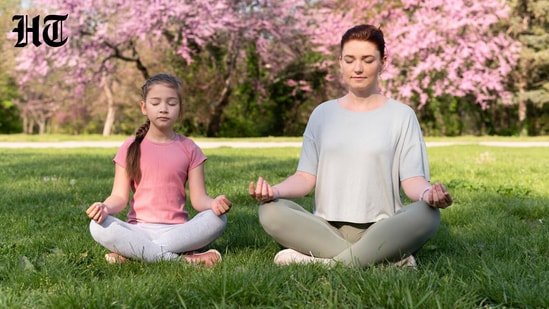
Parenthood is one of life’s most meaningful roles, but also one of its most demanding. Some days, it feels smooth and manageable. On other days, it feels like everything is happening at once. You’re juggling school routines, work, your child’s moods, and your own stress, all at the same time. In the middle of this, it’s not always easy to stay calm and fully present. Slowly, stress and tiredness start to take over, and the simple joy of spending time with your child can get lost in the rush of everyday life.
Well, this is what modern parenting often feels like: constant overwhelm, a low level of anxiety, and a mind that never really switches off. And in the noise of daily responsibilities, something important slowly gets lost: the ability to be fully present and engaged with your child in the moment.
ALSO READ: 5 ways intuitive empaths see and experience the world differently
While most parenting advice focuses on techniques, there’s another approach that begins with you. Not what you do, but how you feel inside.
Philosopher and spiritual teacher Osho introduced a meditation process called the Mystic Rose, a 21-day journey designed not to fix behavior, but to release emotional weight. It’s simple in structure, yet deeply transformative:
- Laugh for three hours a day for seven days
- Cry for three hours a day for seven days
- Sit in silence for three hours a day for seven days
No overthinking. No analysis. Just allowing yourself to fully experience three fundamental human states: laughter, tears, and silence.
Why parents need emotional release
Think about how often your mind is always running and rarely pausing. Well, when you live in that constant loop, it creates a quiet restlessness. Not because life is always difficult, but because the mind keeps trying to control everything.
For parents, this becomes even more intense. You are not just managing your own emotions, but also responding to your child’s needs. And when there’s no space to process what you feel, those unexpressed emotions do not disappear; they rather build up. They show up as irritation, impatience, or emotional distance.
This is where emotional release becomes essential. When emotions are not fully felt, they leave behind residue: unseen, but heavy. Clearing that emotional backlog is one of the most honest ways to show up better for your child.
The power of Laughter, Tears, and Silence
This meditation technique is considered unique because of its flow.
Laughter comes first. It breaks through stiffness, loosens the body, and softens the emotional guard you didn’t even realize you were holding. Then come tears, the layer beneath laughter, where suppressed sadness, stress, and anxiety begin to dissolve. And finally, silence. Not the forced quiet, but a natural stillness that arises once everything else has been expressed. In that silence, you are not trying to fix anything; you are simply observing. And that space where you are no longer reacting, just witnessing, is where real calm begins.
When you start clearing emotional clutter, something shifts naturally. You don’t have to remind yourself to ‘stay calm’ or ‘be patient.’ It just becomes easier. You are less reactive, and the small things don’t trigger you as quickly. Your responses come from a more grounded place rather than from built-up frustration.
ALSO READ: Gaur Gopal Das shares 5 simple ways to add spirituality to your everyday life
And children notice this immediately. Because children don’t just listen to what you say, they absorb how you are: your tone, your energy, your presence. A tense parent creates a tense environment. A calm parent creates a safe one.
Breaking the cycle of reactivity
Many parenting patterns are not intentional, but inherited. When you carry unresolved anxiety or emotional strain, it often spills into your interactions. But when you begin to consciously process your own emotions, that cycle starts to break. You are no longer reacting to old buildup. You are responding from clarity. The relationship with your child becomes more open, less heavy, and more connected.
Easy steps to practice this meditation daily
- You don’t need to follow the full 21-day structure to begin. Start small.
- Let yourself laugh freely, even at something silly.
- Allow yourself to cry when emotions rise, without pushing them away.
- Sit in silence for a few minutes each day, without distractions.
In the long run, children don’t remember perfect routines or flawless parenting strategies. They remember how they felt when they were with you. And the truth is, the best thing you can offer your child is not perfection, but presence.
ALSO READ: How to shift the energy in your home in 7 days, according to a Feng Shui expert
Disclaimer: This content is for general information purposes only, and is not a substitute for professional advice.
