

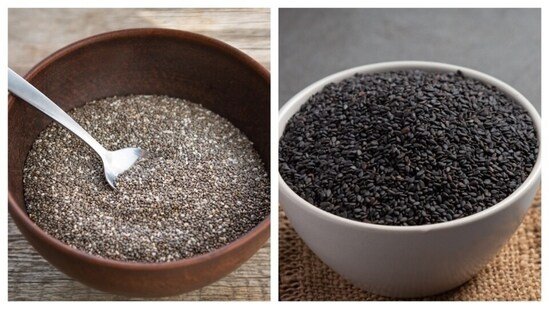
Dietician Shweta J Panchal identified the differences between these two seeds in her Instagram post on April 10. She helped dissect the variations. Let’s take a quick look at each of the seeds for better clarity.
1. Appearance
Sabja and chia seeds may look similar, but upon closer look, you will realise they are different. The dietician revealed the visual difference, “Sabja seeds are jet black in colour and chia seeds are greyish in colour with a few black and white speckles.”
2. Seasonal nature
Certain seeds are seasonal, while others can be eaten year-round. The dietician segregated them based on their functionality and properties. Since saja seeds aid in calming you because of their cooling properties, they can be consumed in summer to beat the heat-related issues like acidity and bloating. Chia seeds have neutral benefits, making them suitable for year-round consumption without any prominent seasonal limitations.
3. Soaking time
Preparation is another area where these two seeds differ. Since, sabja seeds swell quickly, Shweta said, “When you add sabja seeds in water, it hardly takes them 5-10 minutes to swell up.” But chia seeds take longer, requiring at least 30 minutes or even overnight to fully expand and get to their gel-like texture.
4. Nutritional focus
Next, let’s look at the most important, their nutritional profiles, and each is great for your health. But their strengths lie in different areas.
“If you are looking for better gut health, bloating, acidity, and constipation, sabja seeds would be your go-to option. If you are looking for overall higher fibre intake, weight loss, better omega-3 content, which will also help your skin health, then chia seeds would be your go-to option,” Shweta elaborated.
5. Usage
How you add to your diet also differs, as the dietician noted that sabja seeds are commonly added to drinks like nimbu pani (lemon water), coconut water and traditional sharbat. Whereas, chia seeds are a bit more versatile and more flexible, finding a place in smoothies, breakfast bowls and puddings. So it means, for light, refreshing drinks, sabja seeds fit the bill, but for more meal-based options, chia seeds work better.
Depending on your fitness requirements and dietary preferences, choose your best seed.
Note to readers: This report is based on user-generated content from social media. HT.com has not independently verified the claims and does not endorse them.
This article is for informational purposes only and not a substitute for professional medical advice.
