

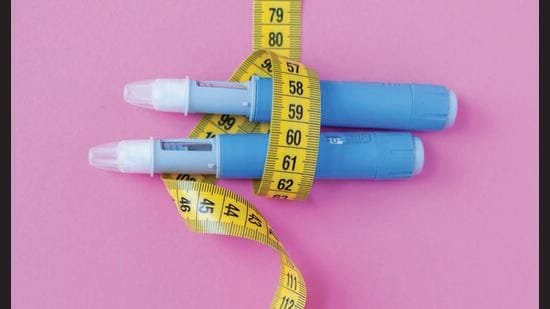
In November 2024, I wrote in this column about the imminent arrival of weightloss drugs like Ozempic and Mounjaro and how they would change the world. The first and most immediate effect, I predicted, would be on the diet industry. The efficacy of the drugs (proven by scientific studies) was such that fad diets would be discredited, nobody would publish diet books and so-called weightloss clinics run by dodgy ‘specialists’ would close down.
The second effect, I said, would be that people (at least those who could afford the drugs) would get thinner overall. Perhaps there would also be a reduction in diabetes numbers, and cardiac health would improve within the upper-middle class.
I don’t have any figures to buttress my case, but I think that, anecdotally, I have been proven right on both counts. When was the last time you heard anyone talk about the Fit For Life diet? About Atkins? About the need to give up carbs? The new drugs have changed the conversation. Doctors tell me that there has been a distinct reduction in blood-sugar levels among their patients, and that the nature of treatments for cardiac issues has been altered.

Those are the effects among a relatively tiny sliver of patients at the top of India’s economic pyramid. But elsewhere in the world, the effects have been so profound and so widespread that the Financial Times rated the introduction of the new drugs as one of two scientific breakthroughs that have loomed largest in the public imagination in recent history; the other is, of course, AI.
Nor have the consequences of the boom in these drugs been restricted to public health. There have been repercussions in the global economy as well. There are statistics to establish that people are buying less food in the West. Specific sectors have been hugely affected. Sugar prices have halved in the two years since these drugs caught on. Ice-cream manufacturers face sales that are either stagnant or dropping. Consumers are buying fewer ultra-processed foods.
The biggest surprise has been the collapse of liquor sales in America. All liquor companies operating in that market are in a state of crisis, as inventories pile up and manufacturing facilities (most recently a Beam plant) are closing.
Is this because of weightloss drugs? Probably. We know that these drugs make people drink less alcohol. And as their use spreads, the liquor companies may well be facing a structural change in the market and a permanent drop in sales.

Bars are facing difficulties – as you might expect – but restaurants also find that people are ordering less food. We could soon see the collapse of the Tasting Menu-only culture (about bloody time too) and fortunately portion sizes are getting smaller – even in America. If this trend continues, we may be rid of the celebrity chef phenomenon and ‘mixologists’ may go back to being called bartenders.
All of this is relevant to us in India because sooner or later these consequences will be felt here too. Actually, it might be sooner rather than later because of two new factors.
The first is that while the drugs have done well here (a month ago, Mounjaro, one of the two most popular weightloss drugs, was the highest-selling branded medication in India), they are still expensive. (Though they are much cheaper in India than in America.) Ozempic (injectable Semaglutide) is the world’s best-known weightloss drug and it recently drastically lowered prices in India. Partly, this was to take on the success of Mounjaro, but mostly it was because Ozempic may die as a brand in the Indian market within a year if it does not do something dramatic.

Next month Ozempic’s patent in India will expire. This means that Indian companies can make their own versions of Ozempic. At least two large Indian companies will launch their generic Ozempic by April. And 20 more Indian versions could be on their way. This is certain to lead to a price war, and Ozempic will find it hard to compete. The Mounjaro patent will remain valid, but who will want to pay so much more for a similar product with shoddier packaging? (The Mounjaro syringe is not as good as Ozempic’s, and no doubt the Indian generics will use even better syringes.)
The second factor that will transform the market is the introduction of oral weightloss drugs. Though Ozempic and Mounjaro may be miracle drugs, there is a strong nuisance element to both. You have to inject them into your body every week, and the syringes must be stored in the fridge, especially in the heat of the Indian summer.
All research shows that the injection is the element of the drug that users hate the most. Not only does it push prices up (because of the cost of the syringes) but only masochists enjoy jabbing themselves with needles four times a month.
In January, oral Wegovy (similar to Ozempic) became popular in the US and will be introduced all over the world. But by the time it catches on globally, newer oral weightloss drugs will also be available. Many drug companies are ready to launch newly invented medications. This could spell the end of the syringe-based weightloss medication boom.

A year from now, we could be looking at a situation in which oral tablets that deliver the same results as today’s versions of injectable Mounjaro and Ozempic are available at reasonable rates. Because they won’t need refrigeration, they will be easily available at every neighbourhood chemist’s shop or kiosk. And because there will be so many new drugs and Indian generics, prices will drop dramatically.
It is at that stage that we will see the weightloss drug revolution spread beyond the Indian upper-middle class and reach anyone who can afford say, an antibiotic or a statin. That’s when everything will change.
Everything? Yes, pretty much everything. The restaurant sector will be transformed. There will be fewer bars. Liquor companies will have to rely on quality rather than quantity. Mithaiwallas will struggle. Big Food will have difficulty in forcing us to eat its packaged ultra-processed products. And more.
What will it do to public health? Well, it is certain to make us slimmer, less affected by diabetes and not so prone to cardiac issues.
Too good to be true? Possibly. But this scenario is now seeming more and more plausible. The future will be thinner and healthier.
From HT Brunch, February 21, 2026
Follow us on www.instagram.com/htbrunch
