

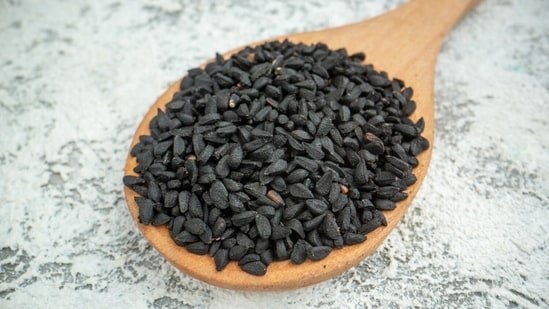
In the world of ‘superfoods’, few ingredients carry as much historical weight as nigella seeds, commonly known as kalonji or black seed. But does it actually live up to the claims of being a ‘miracle’ for shedding extra weight? Dr Saurabh Sethi, a gastroenterologist trained at AIIMS, Harvard, and Stanford, took to Instagram to separate scientific fact from digital fiction. Also read | Boney Kapoor’s ’26 kg weight loss without gym’: Doctor explains if ‘skipping dinner, having fruits for breakfast’ works
Health hero, not a weight loss magic bullet
In a video posted on February 14, Dr Sethi provided a definitive ‘yes or no’ guide to the small but mighty seed. While kalonji is often marketed as a shortcut to a slimmer waistline, Dr Sethi was quick to temper expectations. When asked if black seeds are a ‘weight loss miracle’, his answer was a firm ‘no’.
However, while kalonji won’t replace a calorie deficit or exercise, Dr Sethi confirmed that kalonji was far from ‘just hype’. According to him, the seeds offer significant metabolic and systemic benefits: kalonji was confirmed to lower both blood pressure and cholesterol, proven to improve insulin sensitivity and help regulate blood sugar levels, and validated for reducing joint pain. Dr Sethi shared that trials involving rheumatoid arthritis patients showed marked improvement in inflammatory markers. He also identified kalonji as helpful for those suffering from asthma and seasonal allergies.
In the video he posted, Dr Sethi said, “Black seeds, yes or no? Lowers blood pressure, yes. Lowers cholesterol, yes. Protects liver and kidneys, promising but mostly experimental data.Improves insulin sensitivity and blood sugar, yes. Weight loss miracle, no. Reduces inflammation and joint pain, yes. We do have some evidence from rheumatoid arthritis trials which show inflammatory markers improve. Helps asthma and allergies, yes. Antioxidant rich, yes.”
‘It is toxic in very high doses’
Despite the long list of ‘yeses’, Dr Sethi urged caution regarding high-dose consumption. While the seeds are rich in antioxidants, they are not safe in unlimited quantities, he said: “Safe in any amount? No.”
Dr Sethi warned, “It is toxic in very high doses.” He also said that while many claim kalonji protects the liver and kidneys, the current evidence is ‘promising but mostly experimental’, suggesting that human-centric clinical data is still catching up to the laboratory findings.
How to use kalonji safely
By shifting the focus away from ‘miracle weight loss’ and toward genuine metabolic support, Dr Sethi’s breakdown offered a grounded perspective on a kitchen staple that has been used for centuries. For those looking to integrate this ancient spice into their modern diet, Dr Sethi provided a practical, easy-to-follow guideline. He concluded, “Can you cook with the seeds? Yes. How much to consume? Half to one teaspoon on a daily basis.”
Note to readers: This report is based on user-generated content from social media. HT.com has not independently verified the claims and does not endorse them.
This article is for informational purposes only and not a substitute for professional medical advice.
