

Thomas Draca, who is spearheading the bowling for Italy as the country makes its ICC T20 World Cup debut, has one of the game’s legends to thank for his introduction to cricket.
Born to a Neapolitan mother and a Yugoslavian father, the 25-year-old grew up in Sydney, obsessing about football. Then, Draca’s father, a wine connoisseur, met Dennis Lillee at a wine event. The two men hit it off. At some point in their conversation Lillee asked Draca Sr if his son played cricket. On hearing that he did a bit of fast-bowling, Lillee invited the boy over for a session. And that’s how Uncle Lillee, as Draca calls him, became the young Australian’s fast-bowling teacher and mentor.
Draca moved to the UK on a cricket scholarship and became a regular on the county circuit, before making it onto Italy’s national team last year.
Love it or hate it, there is one thing the T20 format has done for cricket: helped it spread to countries without a cricketing culture, and helped those countries rise rapidly through the ranks (because the learning curve for the T20 is much shorter than for the Test or ODI).
With the format’s World Cup expanding to 20 teams in 2024, nearly all nations that play cricket (even ones like Italy, where the game is a tiny blip on the country’s radar) get the chance to compete on the big stage. This means many more players can compete at this level too.
Among the others making their debuts at the ongoing World Cup, for instance, is Zainullah Ihsan, who was 16 when he arrived alone in Scotland, seeking asylum. Back home in Kabul, Afghanistan, he had been known as a tape-ball quickie. In Glasgow, he watched young men play cricket in a park and has said he felt the deep pull of familiarity in his new, unfamiliar home. Ihsan asked if he could join, and soon his new friends, in awe of his skill, were advising him to join the local club.
At the club, the coach, liking what he saw, asked him to turn up for the next T20 game. When he performed well there, he was granted free membership of the club. By the following year, he was on Scotland’s U-19 team. Even so, the World Cup call was a surprise; the 19-year-old has not been on the national team before this.
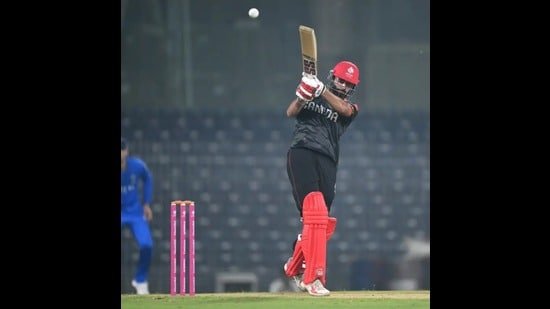
Canada’s opening batter Yuvraj Samra, 19, has an interesting tale too. He was named after Yuvraj Singh, his father’s favourite cricketer. Like Singh, who has hit spectacular 12-ball fifties at World Cup matches, this Yuvraj cemented his place on the Canadian squad with a 15-ball 50 against Bahamas last year.
Haider Ali, 25, UAE’s main bowling weapon, was born in a small village in Pakistan’s Punjab and worked as a waiter at a highway dhaba and sold fruits on the streets of Lahore as he chased his cricket dream. When that did not materialise, he moved to UAE to look for work, and ended up chasing the dream there.
Shubham Ranjane’s grandfather played for India in the 1950s. His father played for Maharashtra. Ranjane played in the Ranji tournament for Maharashtra, Mumbai and Goa, before moving to the US to try his luck there. Now, at 31, he is at the World Cup.
Here’s hoping the debutants have a wonderful experience, as the game opens up to new parts of the world.
(Email Rudraneil Sengupta on rudraneil@gmail.com. The views expressed are personal)
