

We’re going to bet you didn’t know that…
– about half of Japan’s samurai were, at one point, women.
– a number were Christian.
– none were really honour-bound.
– there’s a strong link between the samurai and Star Wars.
Let’s take that last one first.
The ancient, monastic Jedi order that drives so much of the action in George Lucas’s Star Wars films, he has often said, has drawn deeply from Japanese culture.
The emphasis on discipline, loyalty and selflessness, in fact, can be traced directly to Bushido (Japanese for Way of the Warrior), an unwritten and largely romanticised idea of the samurai code that emerged in modern Japan and spread and was further romanticised in the West. The flowing robes, helmets and visors borrow heavily from their armour too, Lucas has said.
The samurai tradition itself dates back at least 1,000 years. Long before Star Wars and modern popular culture, their story was already being shaped into myth.
So what’s true; what isn’t; what have we most misunderstood? An exhibition at the British Museum (from February 3 to May 4) aims to set the record straight. (They may have taken a lot of our stuff, but they certainly do interesting things with it, don’t they?)

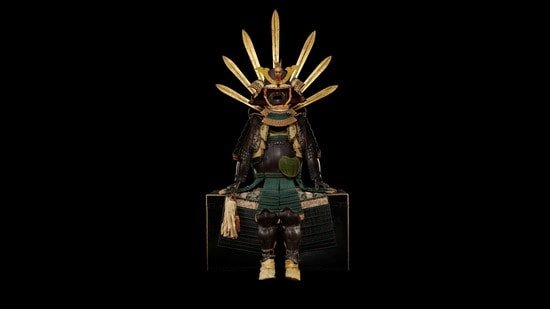
Through 280 objects from the museum’s collection and from 29 other sources worldwide, the exhibition titled Samurai traces how these fighters rose from an early band of mercenary warriors to rule Japan for nearly 700 years (1185 to 1868), only for the entire culture to be abolished soon after, as Japan moved from a feudal society to a modern nation-state.
So who were these warriors, and how did they end up in so many of our fictionalised worlds? Take a look.
* Were the samurai always revered soldiers?
They were not. As mercenary warriors in the 10th century, they were paid to fight on behalf of feuding aristocrats. Most low-ranking mercenaries were farmers driven to this even-more-perilous occupation by sheer desperation.
Persistent crop failures and famines drove this shift, Rosina Buckland, the show’s lead curator, and Oleg Benesch, a professor of modern history at University of York, write, in the book Samurai, released to accompany the exhibition.
In a few generations, though, the samurai had garnered enough political power to establish the first military government or shogunate, in 1185, with the emperor staying on as nominal head of state.
The emperor and his court, of course, were far from thrilled by this development.
“Though the warriors obtained power, the court and its occupants continued to command authority… and regarded these warriors as their social inferiors. For centuries thereafter, warriors aspired to courtier status and aspired to master the courtly arts so as to be seen as cultural equals,” Buckland and Benesch write.

* Was theirs an exceptionally honourable rule?
Well, who can we really say that of?
For centuries after the shogunate was established, feuds and conflicts raged on. Far from upholding ideas of fairness and honour to the death, records indicate that instances of defection and deceit were fairly common.
Honour and loyalty were certainly valued, as they are in most armies. But the tales of legendary heroes would come, as is so often the case, from the samurai themselves. Early on, they began commissioning illustrated handscrolls recording exploits in war, in order to claim financial rewards, Buckland tells Wknd.
* One legendary trope that does have roots in history?
That of a peasant rising through the ranks to become a historic figure.
This was true of a number of samurai that went on to become feudal lords, generals and even rulers.
With his tactical genius and strong battlefield skills, for instance, Toyotomi Hideyoshi (1537-98) rose to the post of chief Imperial minister and eventually one of the Three Unifiers (along with Oda Nobunaga and Tokugawa Ieyasu) who played a critical role in the consolidation and establishment of the Tokugawa shogunate that ruled Japan from 1603 to 1868.
Rather ironically, Toyotomi then forbade farmers from displaying weapons, and ruled that only samurai could display their long and short swords as a sign of status.
* How many of these men were there?

At their peak, in the 17th and 18th centuries, there were an estimated 1 million to 3 million members of this hereditary class. These ranged from the shogun or military ruler and his generals to feudal lords and administrators, all the way down to personal guards.
Half of these samurai were women.
The rediscovery of female samurai history “reframes centuries of gendered myth and challenges the hyper-masculine image of the samurai that still dominates film, anime and gaming,” Buckland told The Independent last week.
Women such as Hojo Masako (1157-1225), the widow of shogun Minamoto Yoritomo, for instance, wielded great political power. Others led troops into battle. Tomoe Gozen (1157-1247) commanded a battalion. Elegant silk firefighting uniforms on display at the exhibition suggest that some specialised in battling fires within the largely wooden city of Edo (now Tokyo) too.
* Were the katanas their primary weapon?
Hardly. While the distinctive curved sword was an enduring samurai symbol, what set these warriors apart was a highly evolved art of mounted archery. They fought, and vanquished, by riding their horses at exceptionally high speeds while shooting arrows from a long, flexible bow made of lacquered bamboo.
Swords were more a status symbol than a practical weapon. For hand-to-hand combat, records indicate they used the naginata or polearms (with a lethal curved blade at the end). This was, of course, before the 16th century, when European traders introduced guns.

* Were there really Christian samurai?
Christianity became part of Japan’s diplomatic engagement with the West in the 16th century.
Lavish armour and swords, among other things, were sent over as representations of samurai culture. As Portuguese missionaries arrived in Japan, some samurai converted from Buddhism. The first Japanese delegation to the Vatican, in fact, was made up of their descendants, some of them third-generation Christians.
* So, where do all the legends come from?
The extended warring-states phase of samurai rule finally ended when the Tokugawa shogunate was established by Tokugawa Ieyasu in 1603. An extended period of peace followed that would last until 1868 (when a reformist movement would sweep Japan).
In those 250 years, the country was also deliberately isolated from the West, as its military rulers sought to keep Japan stable, prevent colonisation, and limit Western influence, particularly the spread of Christianity.
Still eager to prove, through artistic accomplishment, that they belonged in the aristocratic classes, some took to depicting elaborate battle scenes in paintings. Others wrote plays about heroes and honourable deaths. Or composed poems about young men who performed fantastical feats of bravery to protect those they had pledged allegiance to, defeat a powerful enemy, or uphold the clan’s honour. Sound familiar?
