

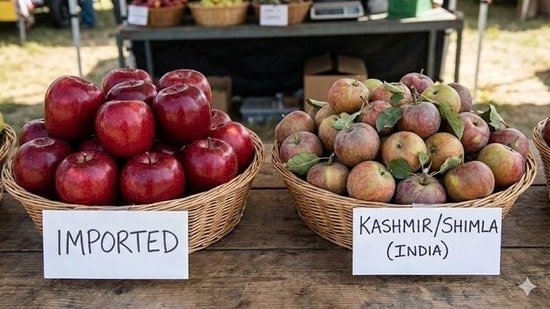
In the aisles of Indian supermarkets, the ‘imported’ sticker often acts as a badge of superior quality, commanding a premium price. However, according to Dr Sudhir Kumar, a neurologist at Apollo Hospitals, Hyderabad, that extra cost might actually be buying you less nutrition. Also read | An apple a day? Nutritionist explains how it really keeps the doctor away
On February 12, Dr Kumar took to X to dismantle the myth that expensive, foreign-grown apples are ‘healthier’ than their Indian counterparts. “The science suggests you might be paying a premium for a less nutritious product,” he shared, urging consumers to look toward the hills of Himachal Pradesh and the valleys of Kashmir instead.
The ‘ freshness’ Illusion
Dr Kumar explained that while technology allows apples to look ‘fresh’ for months, their internal nutritional profile tells a different story. He said, “Research indicates that vitamin C is highly unstable. In controlled atmosphere (CA) storage, apples can lose 40 percent to 85 percent of their vitamin C content within five to nine months.”
Sharing how Himalayan apples reach local markets significantly faster, better preserving their heat- and light-sensitive nutrients, he added, “Imported apples travel over 10,000 km to reach India, spending weeks in transit. Indian apples from the Himalayas reach your plate much faster, preserving more of their heat- and light sensitive nutrients.”
The Himalayan antioxidant advantage
According to Dr Kumar, Indian varieties, specifically royal delicious and starkrimson, are frequently more potent in bioactive compounds than those bred for long-haul shipping. “Studies on Himalayan apples have found high concentrations of phloridzin, quercetin, and catechin-powerful antioxidants that support heart health and help regulate blood sugar. The deep red colour of many Kashmiri/Himachali apples is a sign of high anthocyanin content, which helps fight oxidative stress,” he shared.
The hidden cost of ‘food miles’
Beyond personal health, Dr Kumar highlighted the environmental and economic ‘hidden costs’ of choosing imported fruit. Buying imported means paying for the massive carbon emissions associated with long-distance shipping. Choosing local fruit directly supports Indian farmers and the regional economy.
Dr Kumar suggests that the ‘premium’ paid for local produce stays within the community rather than being diverted to global logistics companies. “Don’t let the shiny wax and ‘imported’ sticker fool you; the real nutrition is in the hills of Himachal and the valleys of Kashmir,” Dr Kumar said.
‘Don’t let the shiny wax and imported sticker fool you’
While ‘an apple a day’ remains gold-standard health advice, the origin of that apple matters. For maximum vitamin C and antioxidant intake, the neurologist’s verdict is clear: go local. Dr Kumar’s final message for Indians: “An apple a day is great, but a fresh, local apple is even better. Don’t let the shiny wax and ‘imported’ sticker fool you; the real nutrition is in the hills of Himachal and the valleys of Kashmir.”
Note to readers: This report is based on user-generated content from social media. HT.com has not independently verified the claims and does not endorse them.
This article is for informational purposes only and not a substitute for professional medical advice.
