

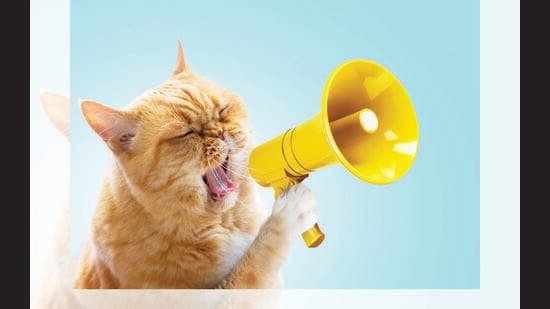
Can AI translate meows, barks, and birdsong into English? It may be able to. Last year, Chinese company Baidu applied for a patent for a new AI-based technology that proposes to convert animal sounds into human language. They claim that mapping vocalisations, behavioural patterns, and physiological signals to specific emotional states can help us translate what animals are saying in real-time, “improving cross-species communication”. In human-speak: We’ll be able to talk to animals, in a way.
Sounds fancy, and a little sus. Scientists have been trying to understand what animals are “saying” for ages. Sure, most animal carers can tell when the dog feels betrayed, when the cat wants a cuddle, when the elephant has had enough of walking, when the gecko is hungry. There’s even an annual award for innovators making progress in interspecies communication. We’ve been trying to decode the songs of humpback whales and cuttlefish’s arm waves. We know that elephants and Marmoset monkeys name each other and that animals have regional dialects just like we do. AI could help us cross the final barrier.
Online, influencers have been going viral for using a series of paw-activated buttons to make it seem like their pet can read words. Bunny the sheepadoodle, who has 1.6 million followers on Instagram, became known as the talking dog because he communicates with his human using a soundboard of English words. Researchers have found, in fact, that dogs respond to words, not just the cues associated with them. “You wanna go for a WALK?” Still, do we really want the actual deets on what our pets may be thinking and feeling?
Real animal lovers know they don’t need to understand their furbabies to bond with them. A global survey conducted by pet and mental health companies Mars and Calm last year found out that 58% of pet owners prefer to spend time with their pets when feeling stressed – rather than their family or friends. It’s obvious why, isn’t it? A cat or hamster won’t secretly judge you while trying to make you feel better with useless platitudes. They won’t offer helpful, well-meaning solutions that make you feel more hopeless. Communicating with animals would take away all that.
Or, imagine that you found out TMI you were never meant to know in the first place. What if your cat actually hates the way you smell? Or your lovebirds thought your voice was annoying? Your bunny might inform you that being picked up feels like being attacked by a predator, or your doggo might say he prefers another family member instead. You might find out that your budgie – surprise, surprise – doesn’t really like being caged. (We already suspect that our cats are merely putting up with us because we feed them. Confirmation would be devastating). That’s emotional damage no one can fix. For the moment, if an animal doesn’t like you, they make sure you know it. Adding articulation to the mix might just make things worse.
Besides, if we could understand everything that animals were saying, children’s books and lore wouldn’t be the same anymore. Beatrix Potter’s Peter Rabbit, all those episodes of Paw Patrol and the whole Zootopia franchise wouldn’t feel magical if we had a device translating an animal’s squeaks or purrs. There’d be nothing left to the imagination.
From HT Brunch, January 31, 2026
Follow us on www.instagram.com/htbrunch
