

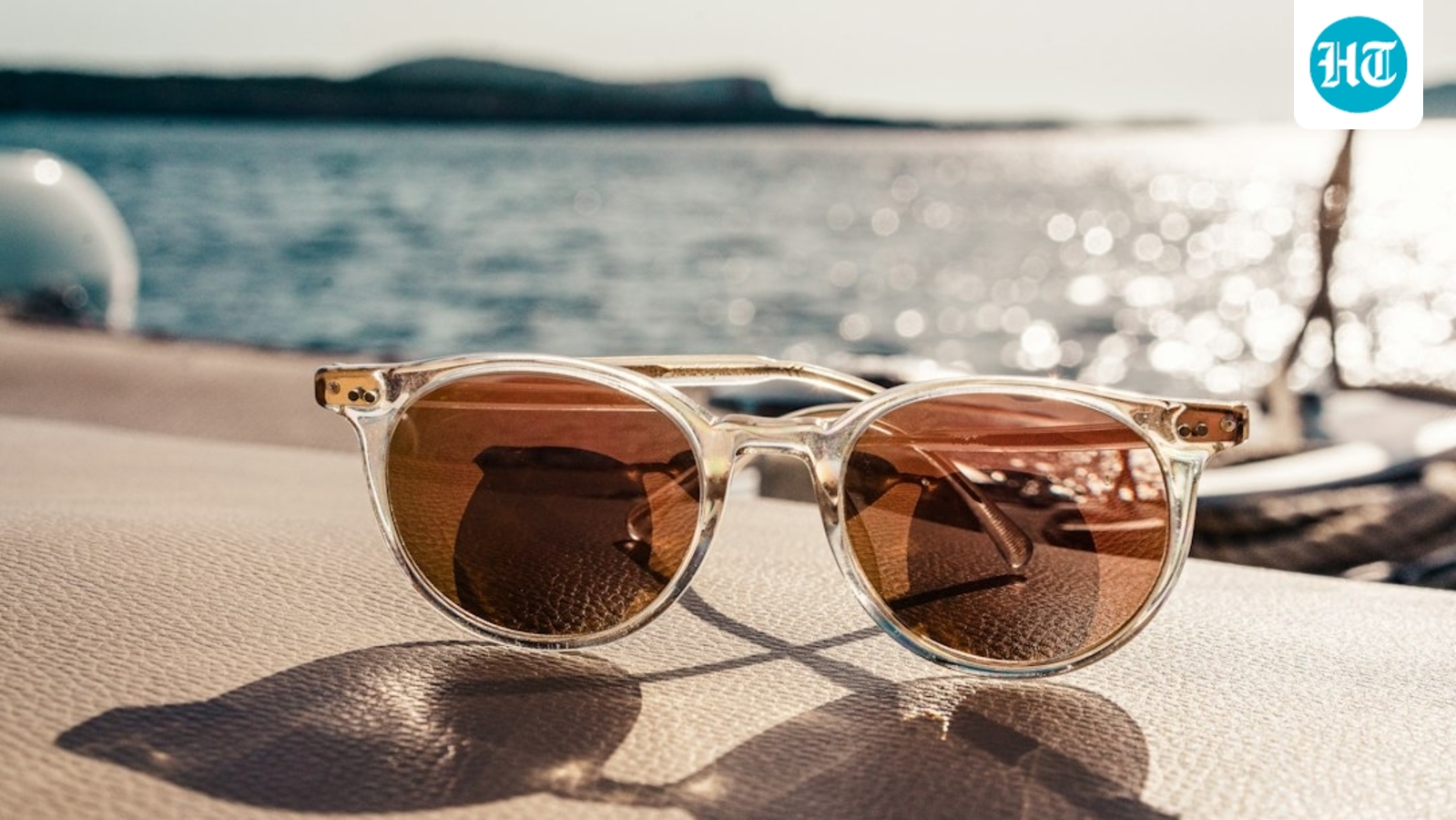
From curved lines to altered colour perception, sunglasses can sometimes change how you see the world. In this edition of ‘Everyday Explained,’ HT Lifestyle spoke to Dr Madhura M, consultant retina, cataract and refractive surgeon at Vasan Eye Care, Jayanagar, to understand why this happens and what it means for your eyes.
Why do sunglasses sometimes make everything look slightly distorted?
According to Dr Madhura, sunglasses can sometimes make surroundings look distorted, unusually tilted, wavy, or slightly out of focus because their lenses filter and refract light. The effect is usually related to the optical properties of the lens, its curvature, material, tint, polarisation, or how accurately it has been manufactured and fitted.
“Polarised sunglasses, for instance, reduce glare by blocking horizontally reflected light, particularly from surfaces such as roads, water and glass,” said Dr Madhura. While this improves visual comfort, some people may initially perceive changes in contrast, depth perception or brightness, making the surroundings feel slightly different. This is particularly noticeable when moving between different lighting conditions or when looking at digital screens.
Another reason could be lens distortion. If the lens has uneven curvature, optical imperfections, poor manufacturing quality, or is not properly aligned with the eyes, straight lines may appear bent, objects may seem displaced, or the wearer may experience a sensation of imbalance. Prescription sunglasses can cause similar symptoms if the prescription is inaccurate or if the eyes need time to adapt to a new correction.
“Most mild distortion experienced with a new pair of sunglasses settles as the brain adapts to the altered visual input. However, persistent distortion, headaches, dizziness, nausea, difficulty judging distances or blurred vision should not be ignored,” highlighted Dr Madhura. These symptoms may indicate an issue with the lens quality, prescription, frame alignment or, occasionally, an underlying eye condition.
How to choose sunglasses?
According to Dr Madhura, sunglasses should not be selected based on tint darkness alone. UV protection is essential, as ultraviolet radiation can damage the eyes over time. A darker lens does not necessarily offer better UV protection. It is advisable to choose sunglasses with certified UVA and UVB protection and ensure they fit comfortably without altering vision.
If distortion continues even after a few days of wearing the sunglasses, it is best to stop using them and have the lenses checked by an optometrist or ophthalmologist. Vision should feel comfortable and natural, not persistently altered. If objects appear wavy or distorted even after removing the sunglasses, an eye examination is important to rule out underlying retinal or macular problems.
Note to readers: This article is for informational purposes only and not a substitute for professional medical advice. Always seek the advice of your doctor with any questions about a medical condition.
