

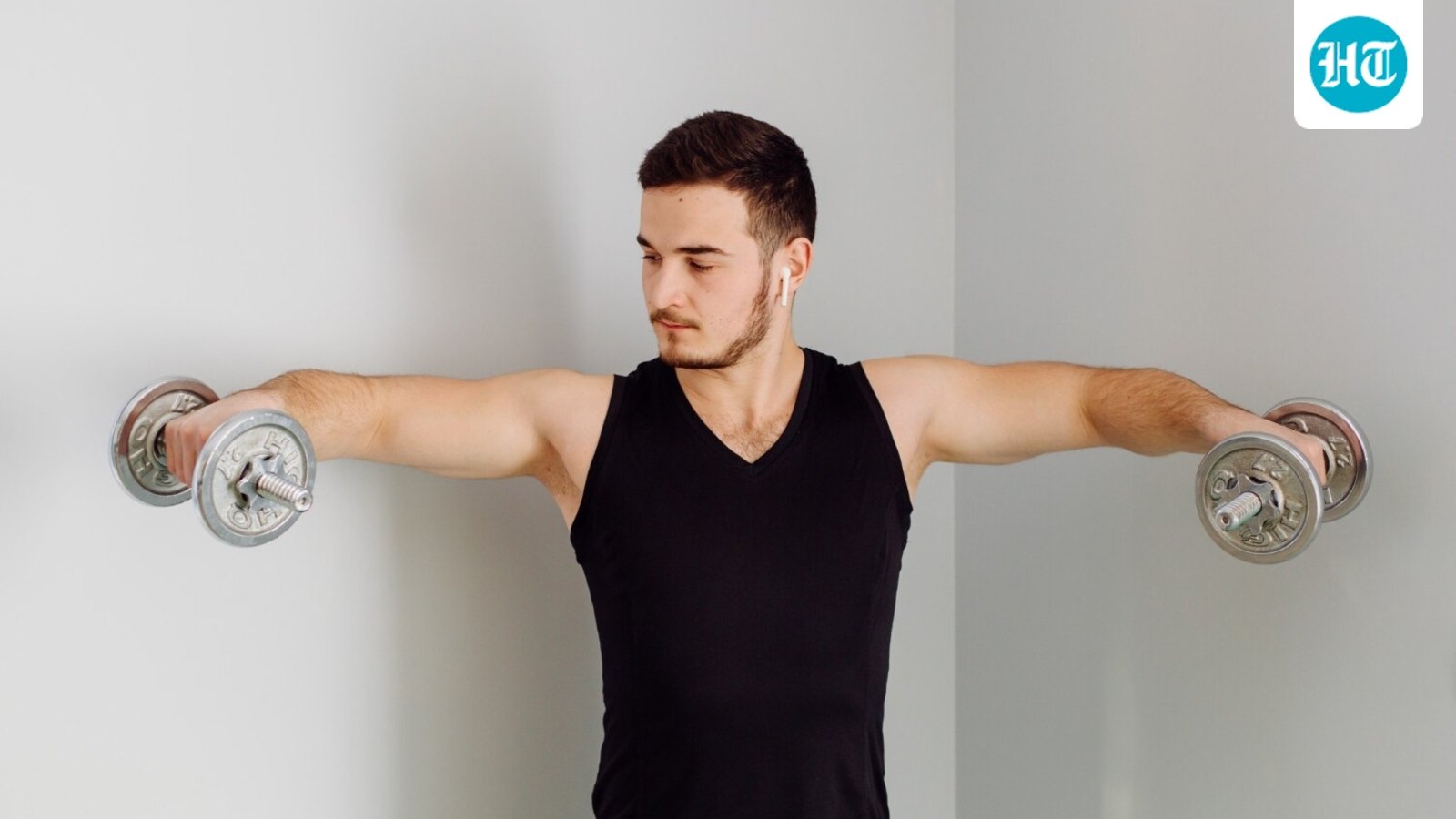
Shoulder exercises, from overhead barbell presses to dumbbell lateral raises, are a common part of gym routines. These exercises strengthen the shoulder muscles. Exercising with care is therefore important, as poor form or excessive weight can stress your shoulders.
ALSO READ: Is your 9-to-5 weakening your bones? Orthopaedic surgeon shares 5 warning signs
Dr Naman Wahal, senior consultant and unit head, orthopaedics at Fortis Escorts, New Delhi, highlighted the rise in shoulder-related problems, saying, “Orthopaedic clinics are noticing something too: more shoulder complaints, and increasingly from people in their twenties and thirties, not the older patients you’d normally expect. A lot of it comes down to how people are actually training.”
So, building shoulder strength is not just about lifting heavier weights or completing more repetitions. How you move, warm up, and respond to discomfort matters too. Dr Wahal shared workout mistakes that can overload your shoulders and explained how to exercise with better control.
Mistakes people make during shoulder training
When doing shoulder exercises, you may unknowingly adopt a posture that worsens the problem.
Here are the mistakes the surgeon mentioned:
1. Ignoring supporting muscles
- Focusing only on bigger shoulders and a bigger chest while neglecting the rotator cuff, upper back, and muscles that stabilise the shoulder blade.
2. Letting the elbows move too far back:
- During chest exercises, this can place excessive strain on the front of the shoulder.
3. Changing posture to lift heavier weights:
- Arching the back or tensing the neck during overhead presses can mean the weight is too heavy to lift with control.
4. Overlooking neck pain
- The neck may compensate when the shoulder is not moving properly.
5. Not adapting exercises when the shoulder is irritated:
- Continuing movements that add rotations, such as Arnold presses, may worsen the pain.
6. Skipping shoulder-specific warm-ups:
- Relying only on the treadmill instead of including gentle shoulder movements and lighter sets before increasing the weight.
What does ‘resting the shoulder ’ mean?
Taking a break from shoulder presses may seem like enough to give the joint some rest. But your shoulders are involved in other exercises too.
Dr Wahal described how push-ups, planks, chest exercises and back workouts also put load on the shoulders. So, skipping exercises labelled as ‘shoulder training’ does not necessarily mean you are resting the joint.
This means you need to monitor your entire workout, rather than stop just one exercise. He said, “Resting the joint properly means looking at everything putting load on it, not just the one exercise that seems most obvious.”
The surgeon also informed that mild soreness after a workout can be normal, but pain that returns with the same movement or comes with new weakness should not be ignored. Stop the exercise that triggers it and get the lingering pain checked.
In the end, Dr Wahal mentioned one rule: “If there’s one rule that covers most of this, it’s simple enough: the moment finishing a rep needs a swing, a neck shrug, or some twist in posture to force it through, that set was already over a rep or two earlier.”
More about the expert: Dr Naman Wahal is an AIIMS, New Delhi-trained orthopaedic and shoulder surgeon with 13+ years of clinical experience. He is currently Senior Consultant & Unit Head, Orthopaedics at Fortis Escorts, New Delhi, and Director of StepUp Joints, his specialised joint and shoulder practice in New Delhi. His clinical focus includes shoulder arthroscopy, rotator cuff and shoulder-instability procedures, sports injuries, joint preservation, joint replacement and bone health.
Note to readers: This article is for informational purposes only and not a substitute for professional medical advice. Always seek the advice of your doctor with any questions about a medical condition.
