

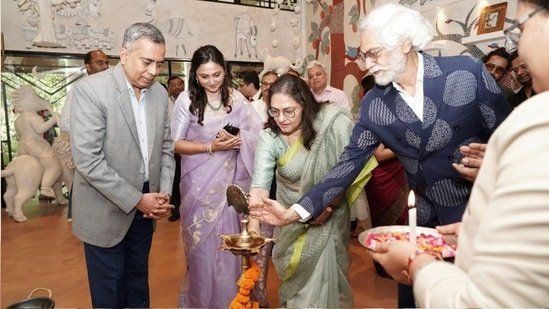
The Ministry of Tribal Affairs, through the Tribal Cooperative Marketing Development Federation of India (TRIFED), unveiled RISA – Timeless Tribal, a dedicated premium brand for tribal textiles, embroideries and handicrafts, and inaugurated the exclusive RISA Store at Gallery No 2, Rajiv Gandhi Handicrafts Bhawan, Connaught Place, New Delhi, on June 10.
The initiative aligns with the central government’s vision of Viksit Bharat, promoting inclusive growth through the economic empowerment of tribal communities while preserving India’s rich cultural heritage.
The RISA initiative has been conceptualised to create a distinct brand identity for tribal products, strengthen market linkages for tribal artisans, facilitate design development and product diversification, and promote tribal heritage in premium domestic and international markets.
Inauguration of the RISA Store
The RISA Store was inaugurated by Ranjana Chopra, IAS, Secretary, Ministry of Tribal Affairs, in the presence of M Rajamurugan, IPS, MD, TRIFED, Sunil Sethi, Chairman, Fashion Design Council of India (FDCI), fashion designer Anju Modi, representatives of design institutions, artisans, industry stakeholders, other renowned fashion designers and officials of the Ministry and TRIFED.
Addressing the gathering, Ranjana Chopra emphasised the importance of preserving and promoting India’s rich tribal heritage through sustainable livelihood interventions and enhanced market access. She noted that tribal textiles, embroideries and handicrafts embody the cultural traditions, knowledge systems and artistic excellence of tribal communities and require sustained institutional support for their continued growth and recognition.
Speaking on the occasion, M Rajamurugan highlighted the role of RISA in creating a comprehensive ecosystem encompassing design development, skill upgradation, product innovation, packaging enhancement and market promotion. He stated that the initiative seeks to generate enhanced livelihood opportunities for tribal artisans while ensuring the preservation of traditional crafts and indigenous knowledge.
How RISA Store seeks to promote tribal art and handicrafts
As part of the first phase of implementation, seven tribal textile and embroidery traditions have been identified based on their cultural significance and market potential. These include Eri Silk and Muga Silk of Assam, Santal Cotton of Jharkhand, Changpa Pashmina of Ladakh, Kotpad Cotton and Dongria Embroidery of Odisha, and Toda Embroidery of Tamil Nadu.
To facilitate design interventions and product development, eminent fashion designers have been associated with the initiative. Anju Modi, Manish Tripathi, Gaurav Jai Gupta, Abu Jani and Sandeep Khosla, and Sameera Dalvi have been engaged to support the development of contemporary product lines while preserving the authenticity and traditional character of tribal crafts.
The initiative is being implemented through the National Design Centre (NDC), an autonomous organisation under the Ministry of Textiles. The project encompasses design development, creation of garment prototypes, capacity building of tribal weavers and artisans, establishment of stitching facilities, strengthening of weaving and handicraft clusters, and improvement of product presentation and packaging.
The National Institute of Design (NID), Haryana, has been engaged for the development of premium and environmentally sustainable packaging solutions for products marketed under the RISA brand.
The first phase of the initiative also includes focused promotion of selected tribal handicrafts, namely Longpi Pottery of Manipur, Turtuk Brass Cutlery of Ladakh, and Dokhra Art of Chhattisgarh, with a view to expanding their market outreach and enhancing income opportunities for artisan communities.
The RISA initiative is expected to contribute towards the economic empowerment of tribal communities, particularly women artisans, while promoting cultural preservation, sustainable production practices and greater visibility of tribal products in national and international markets.
